.png)
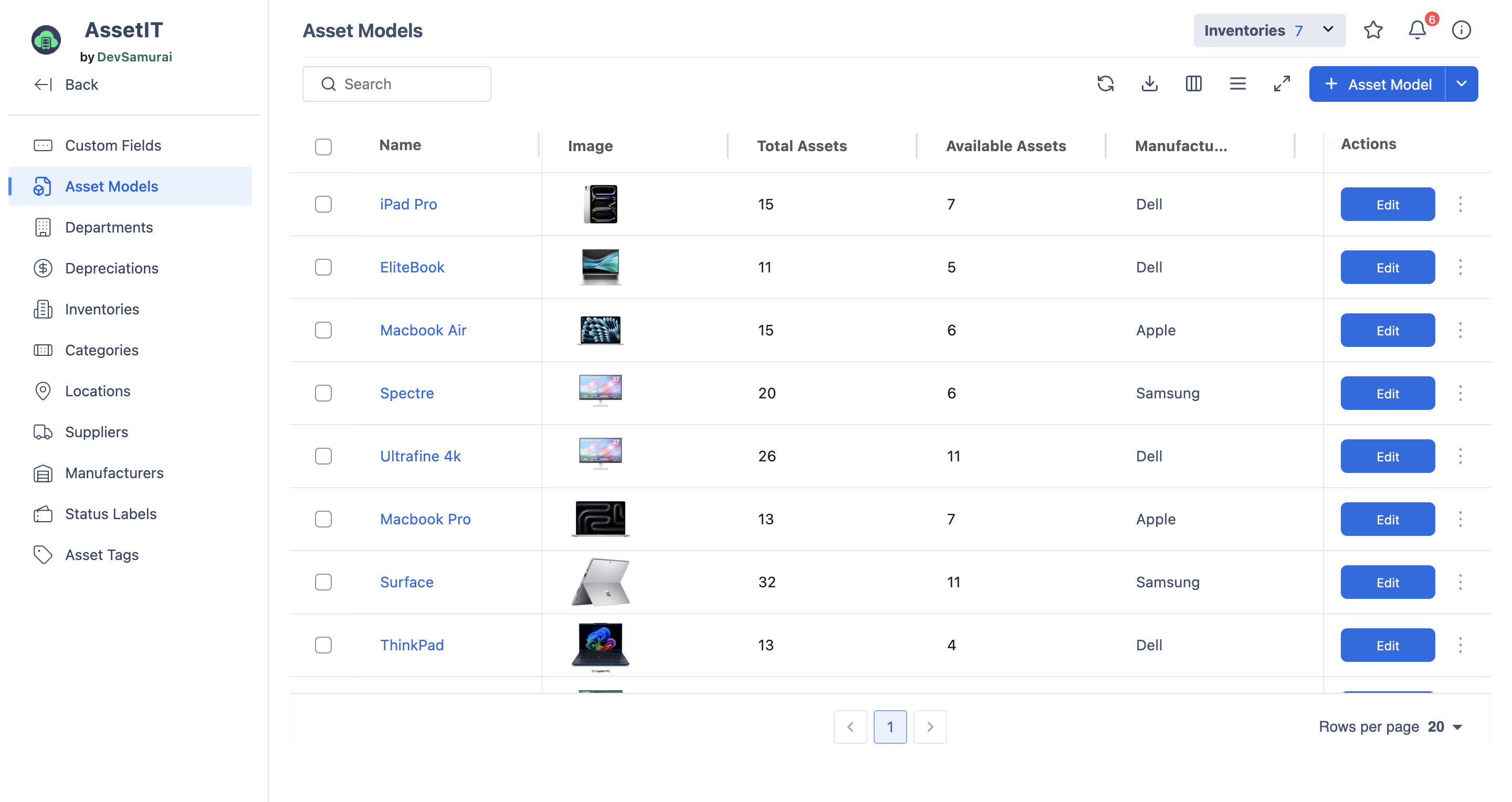
Asset Models are collections of assets that share the same specifications, characteristics, or attributes. Creating Asset Models ensures consistency and accuracy when adding new assets by grouping identical items together.
Creating Asset Model
At the AssetIT sidebar, scroll down to 
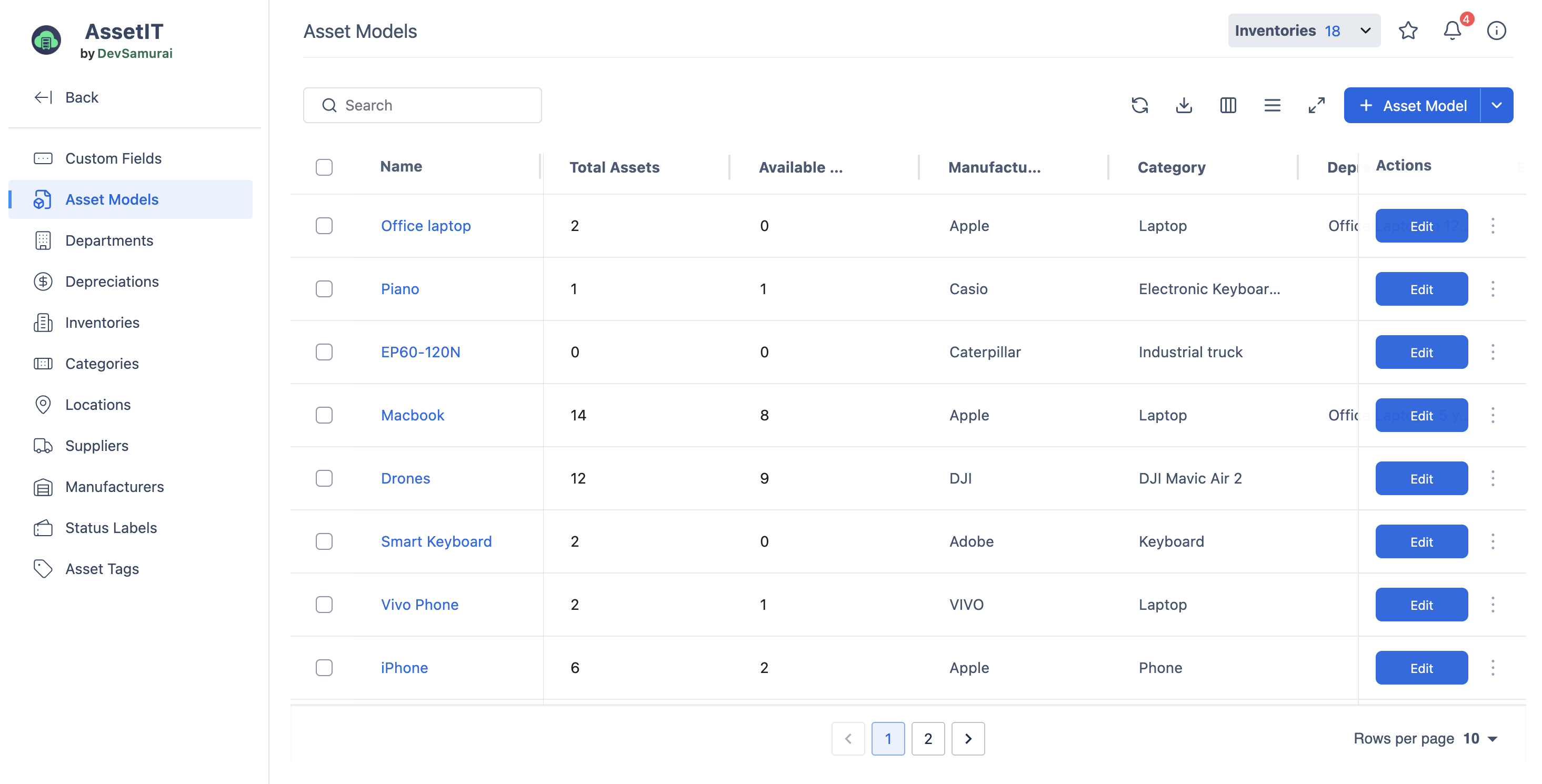
There are 02 ways to create new asset models: bulk import and manual set up .
1. Bulk Import Asset Models
-
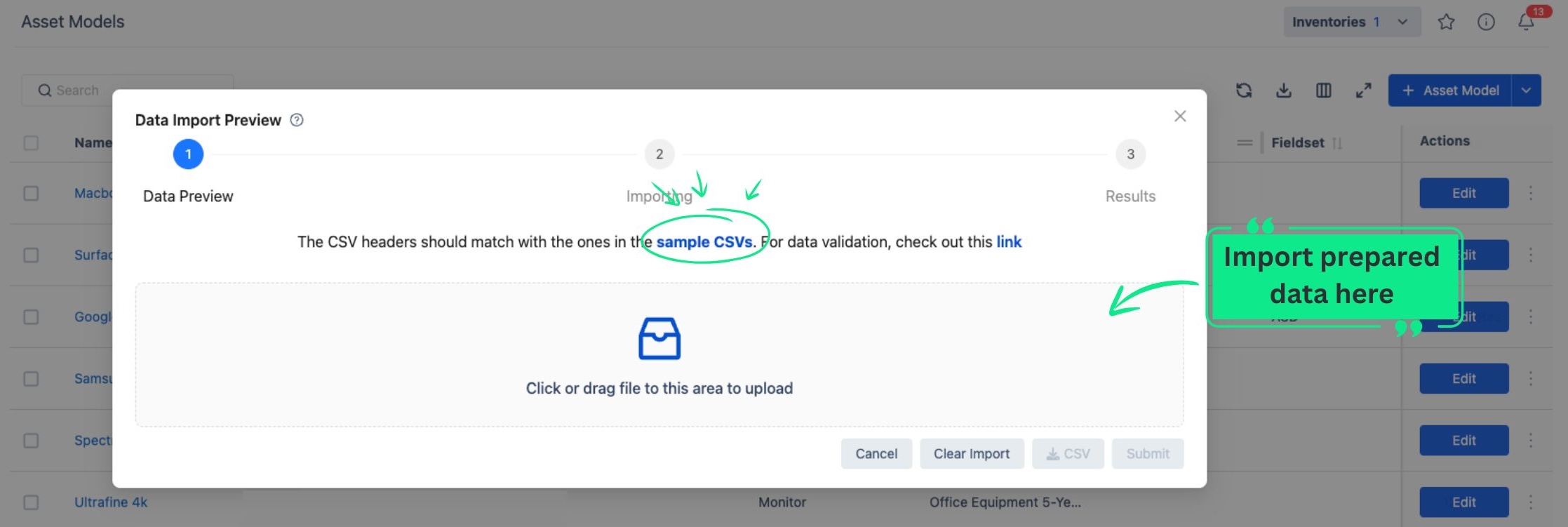
On the top right of the Asset Models page, click on the dropdown of


-
You will see a table that instructs you to use the sample CSV file for data preparation.
-
Once you finish preparing your data, import it into the app. You will then be taken to the Data Preview stage.
-
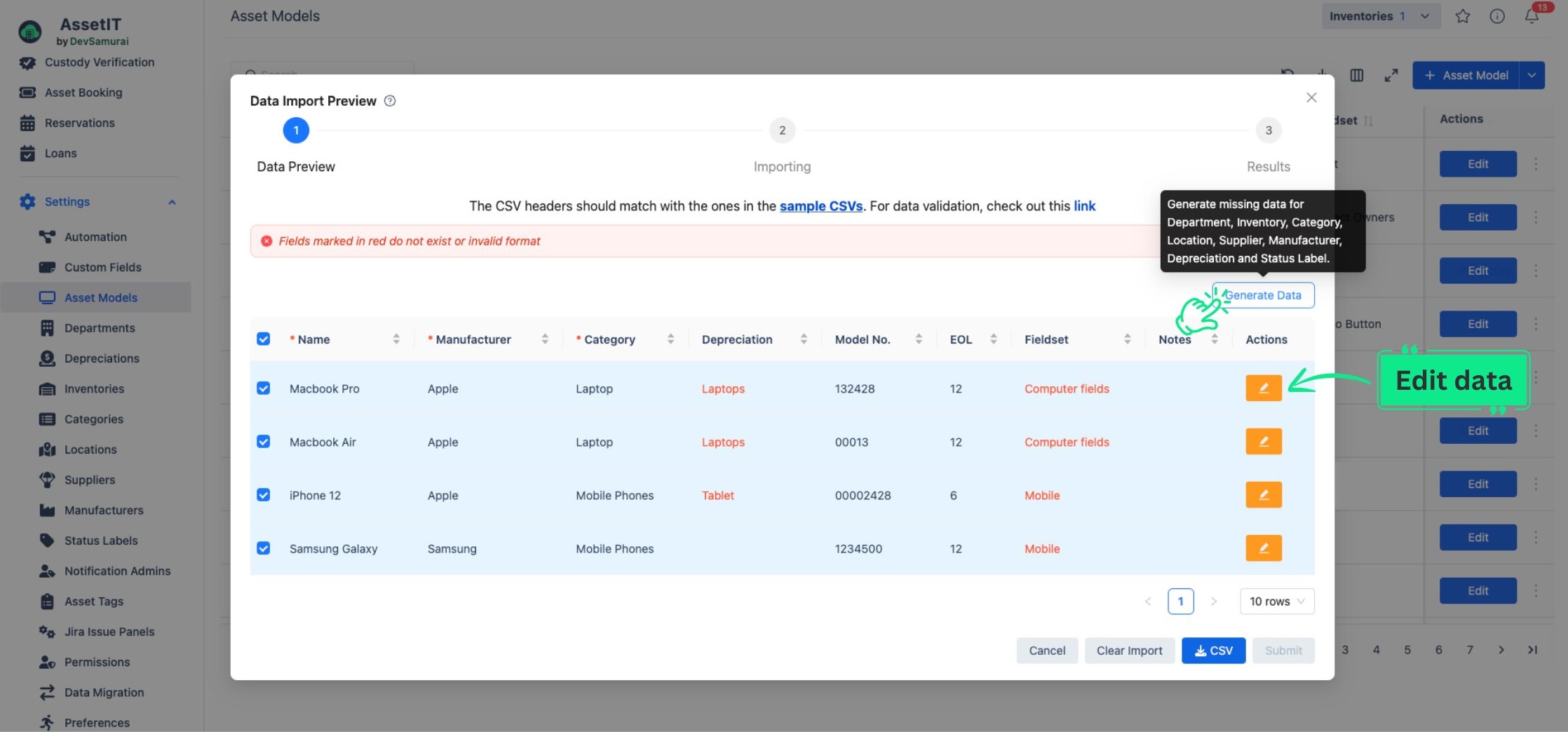
In the Data Preview stage, the app will highlight any fields with errors, allowing you to make adjustments directly.
-
To modify data information, click on the Edit button.
-
To automatically generate missing data for asset model , Department , Inventory , Category , Location , Supplier , Manufacturer , and Status Label , click on the “Generate Data” button.
-
You can also download the most recently modified data into a CSV file for further customization by clicking the 
-
Click on Submit to finish importing your asset models.
-
You should now see a list of asset models on the Asset Models page.
2. Manual Set Up Asset Models
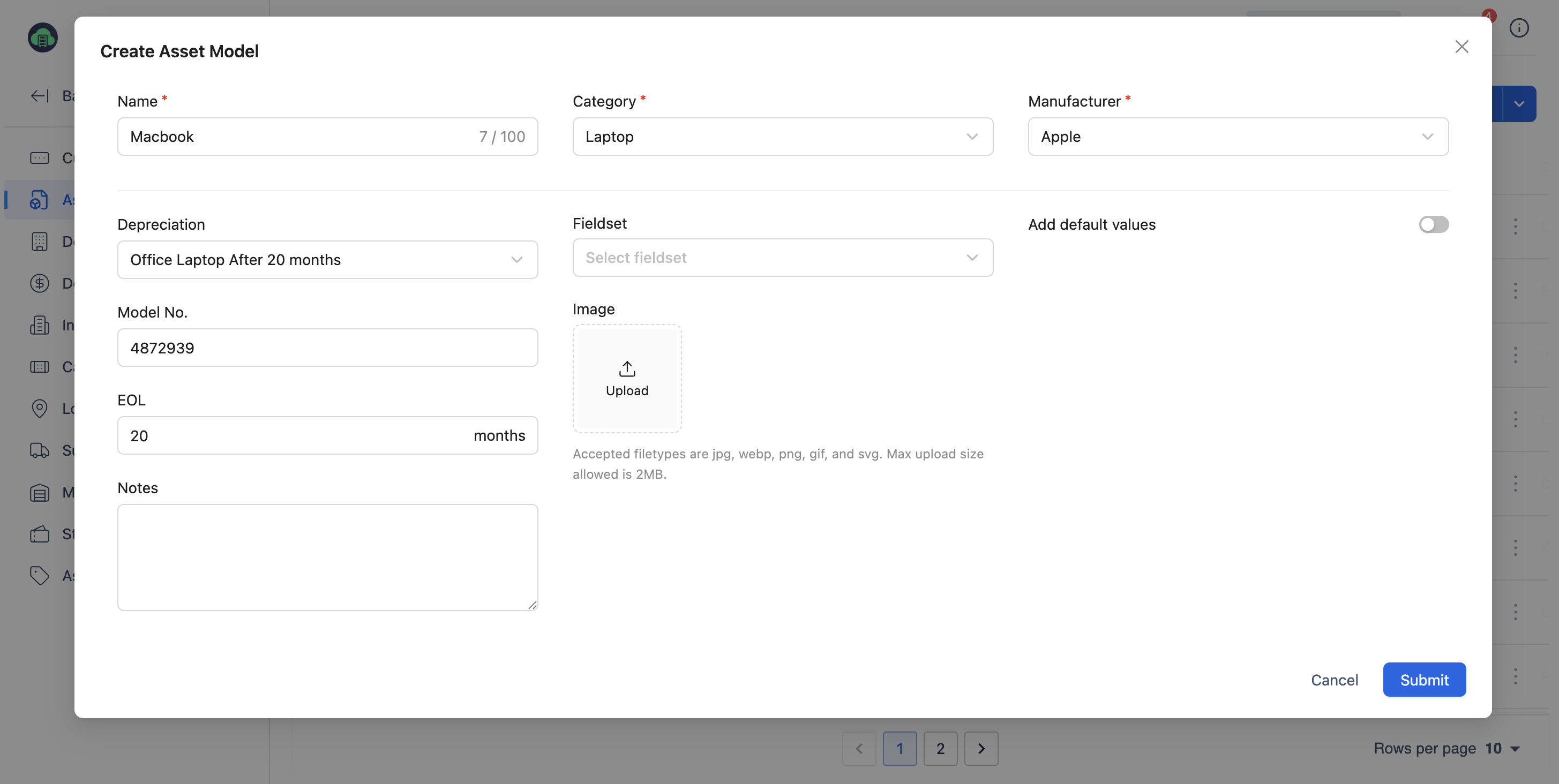
You can manually create each asset model individually. Here's how:
-
In the Asset Models section, click on

-
Fill out the mandatory fields, and complete additional fields as needed.
-
Click on Submit to finish. You should now see your new asset model in the Asset Models list.
PRO TIPS:
-
Quick Add:
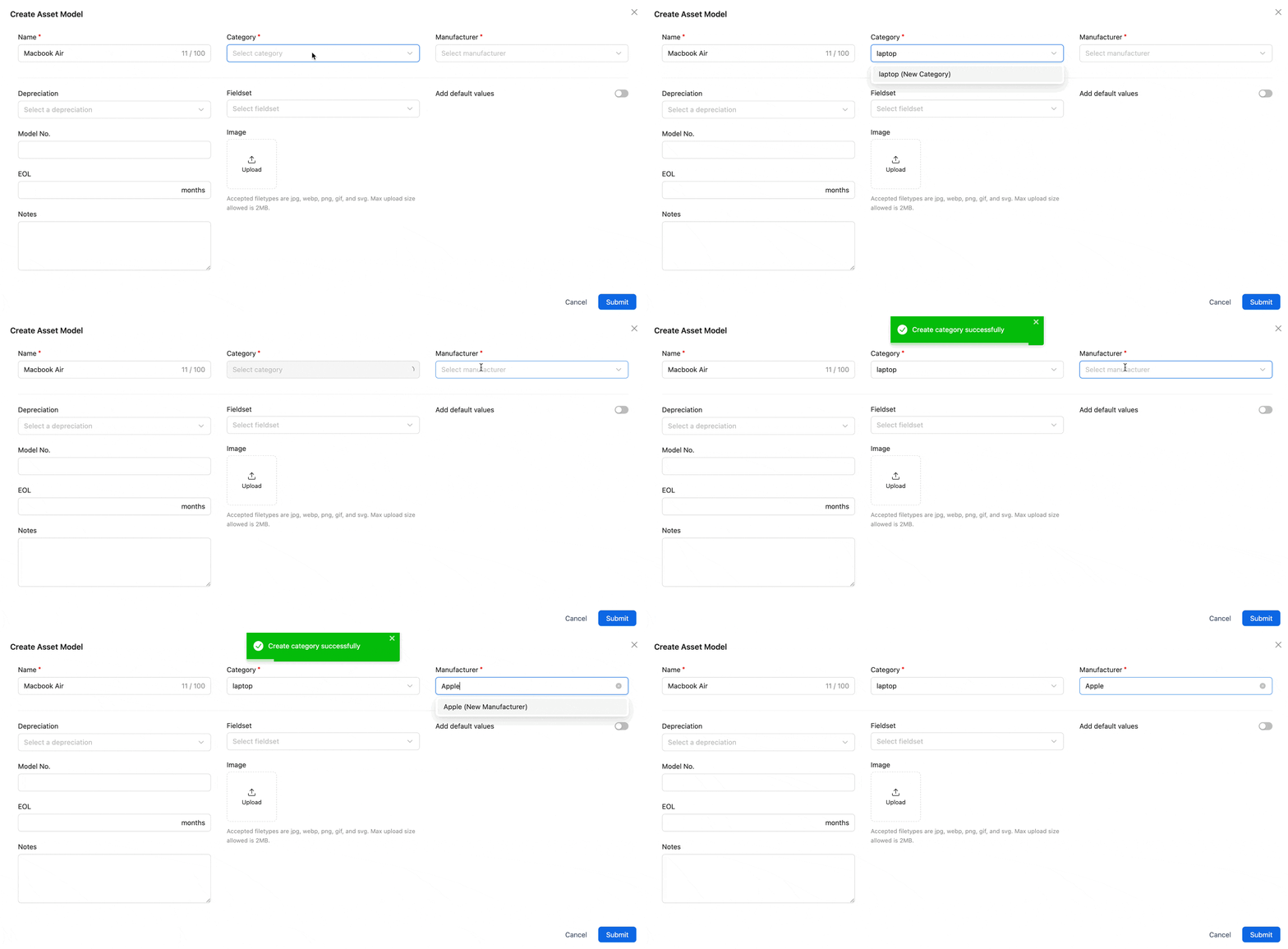
Some fields allow you to choose data from available options, but if the data you need is not listed or not yet available, you can easily create a new one simply by typing the desired data in the field. Once typed, press Enter or Tab to create new data.
-
Model Image Inheritance
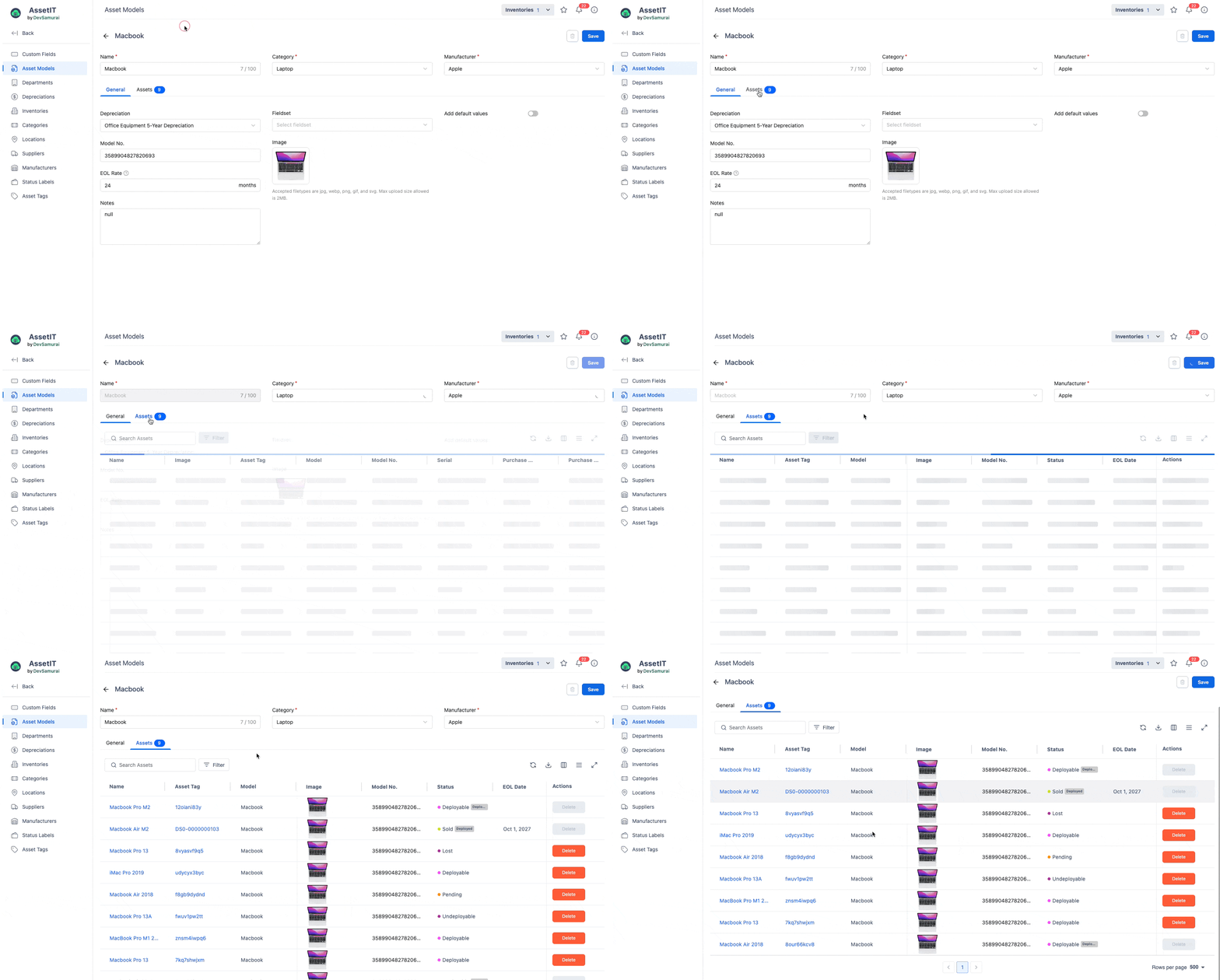
If an asset doesn’t contain an individual image, the system will inherit the image from its model. This ensures every asset is visually represented and helps maintain consistency across lists, bookings, and reports.
-
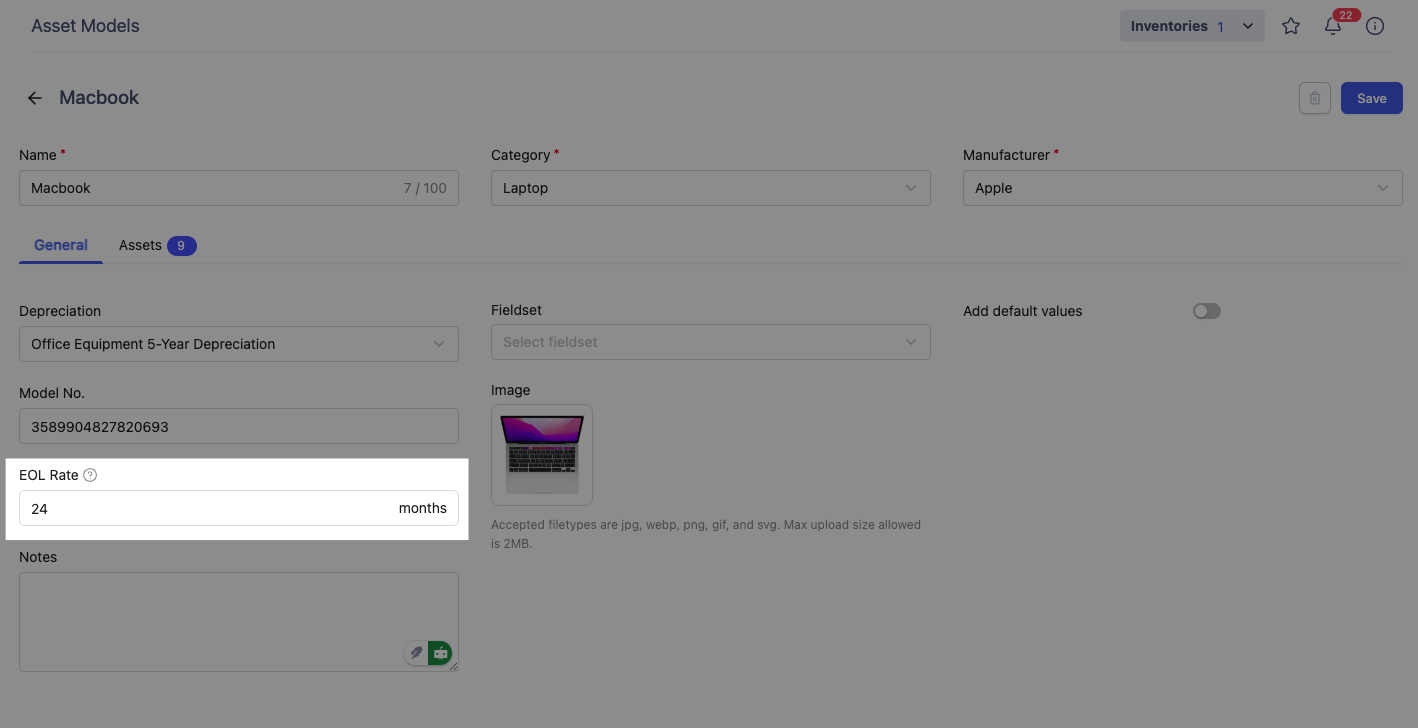
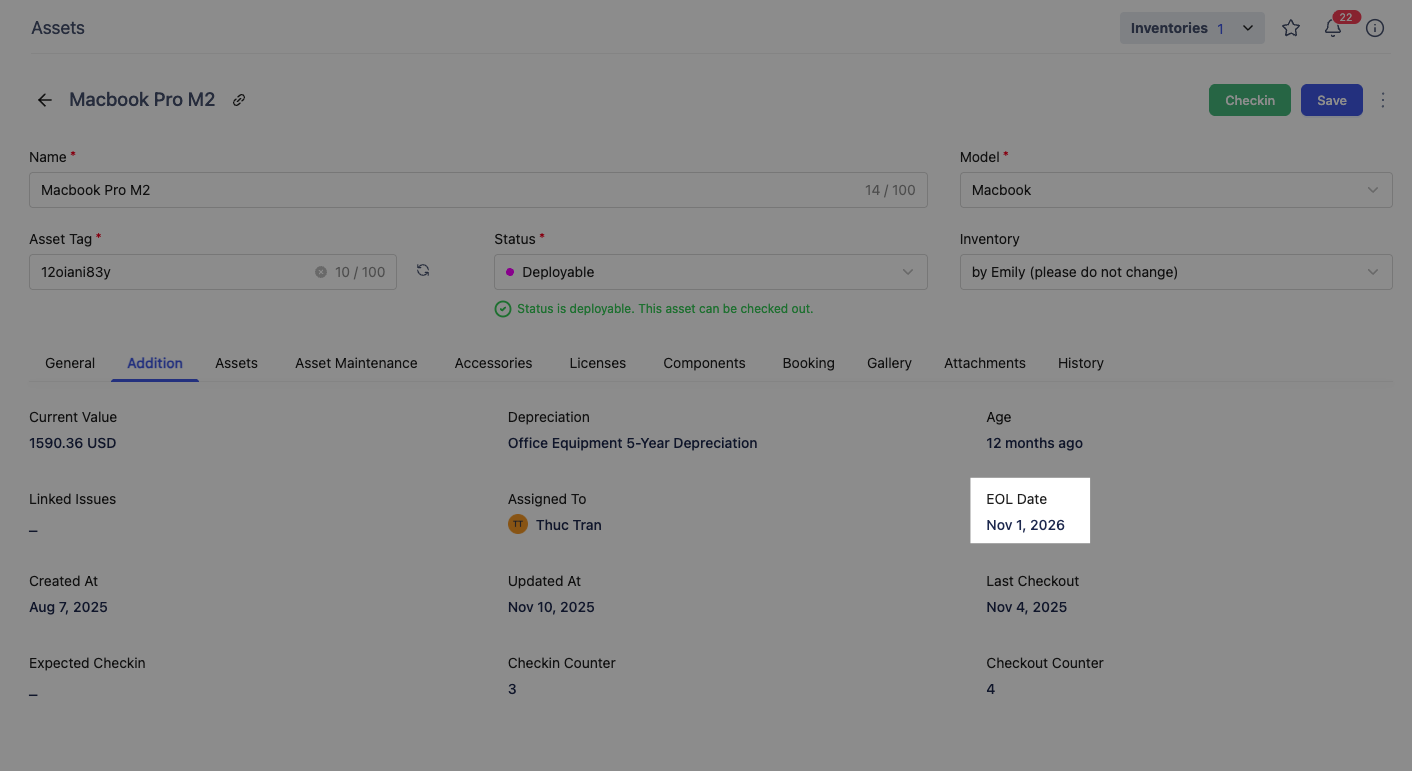
EOL calculation
EOL dates of assets within an asset model will be automatically calculated based on the rate specified in the asset model. This guarantees assets adhere to consistent lifecycle rules and eliminates the need to manually set EOL dates for each asset.