.png)
The Deals Board in Sales & CRM for Jira helps track and manage sales opportunities from initial engagement to closure. Deals represent the active sales opportunities associated with your Accounts and Contacts, and they serve as the central point for managing the sales pipeline. Each Deal is treated as a Jira work item of type :SalesForge_Deal: Sales & CRM Deal.
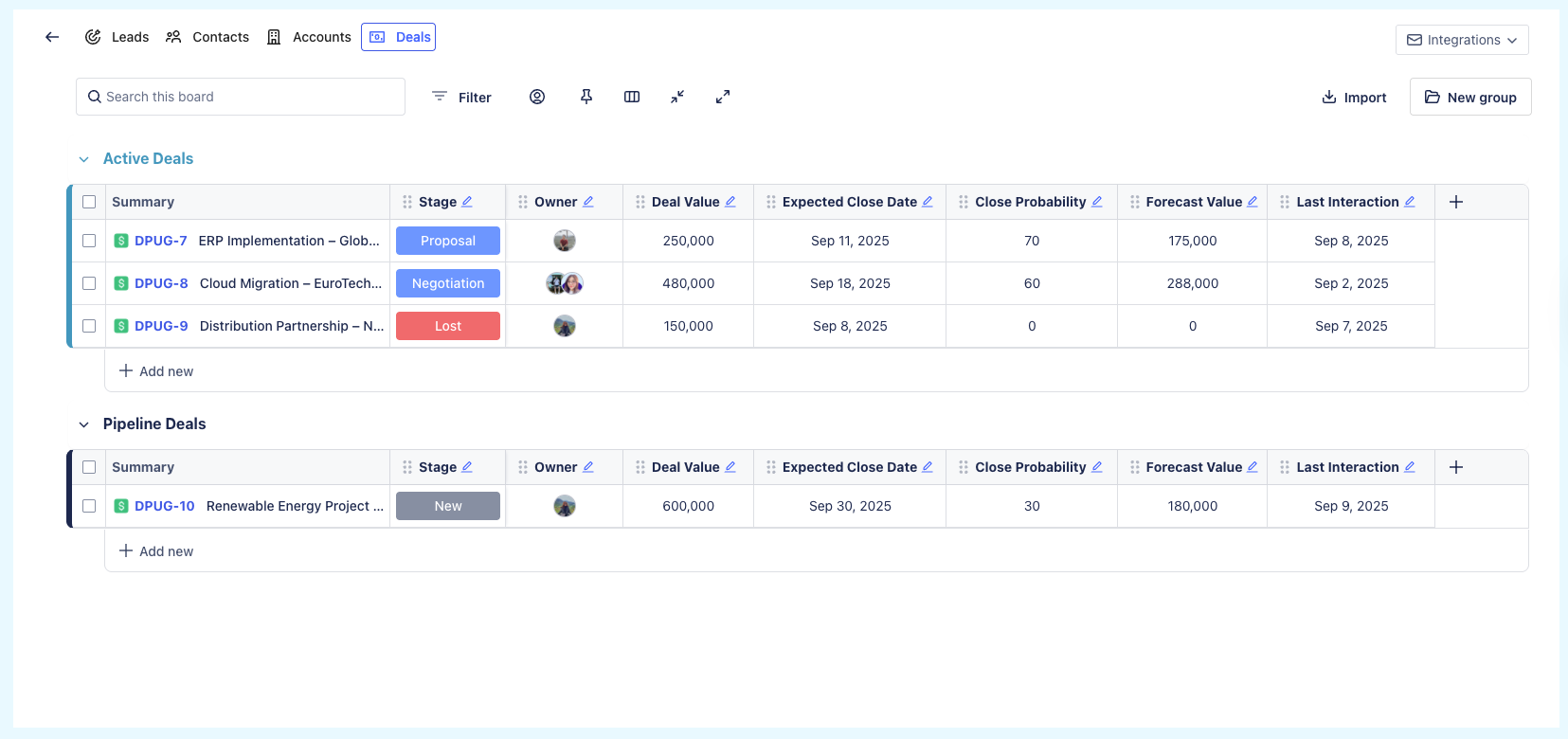
On the Deals board, you can:
1. Filter & Customize Deals Board

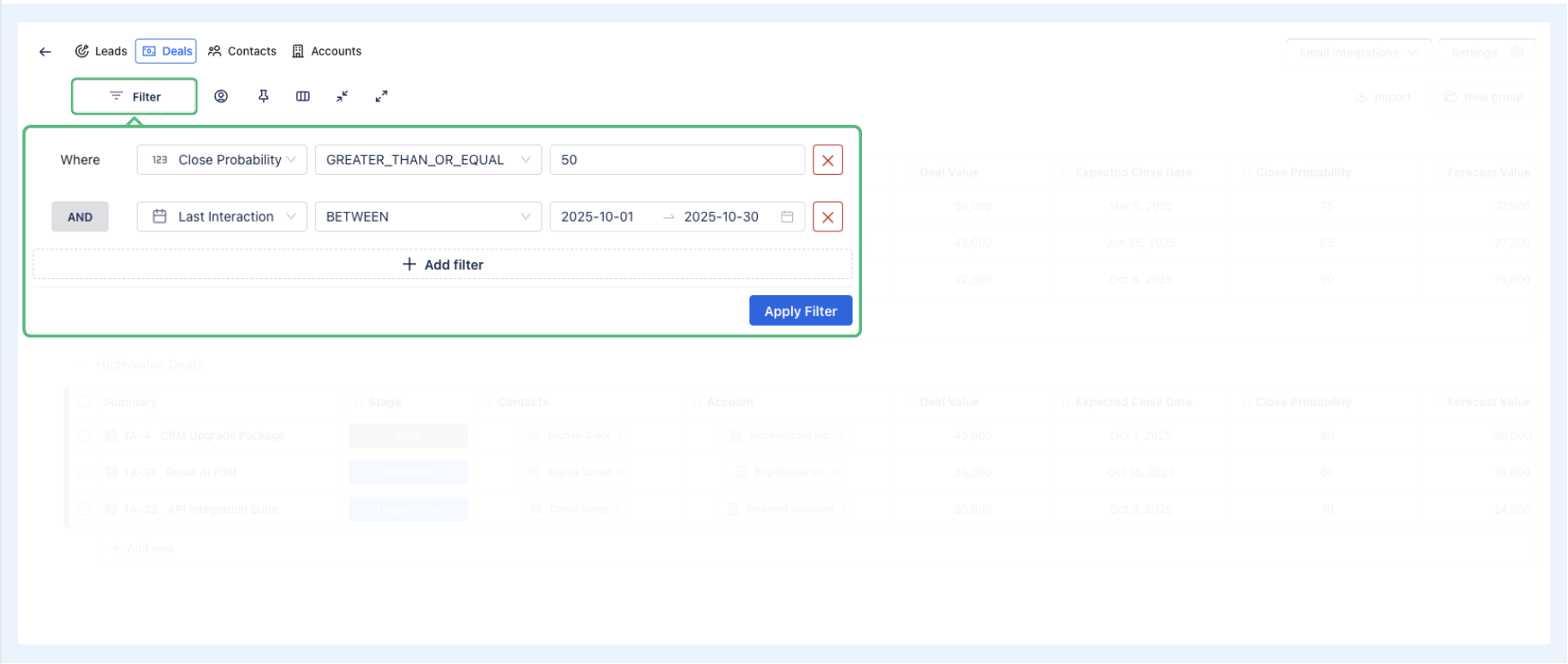
The toolbar provides several options to customize the view of your Deals board, including:
-
-

-

-

-


2. Categorize Deals by Groups
-
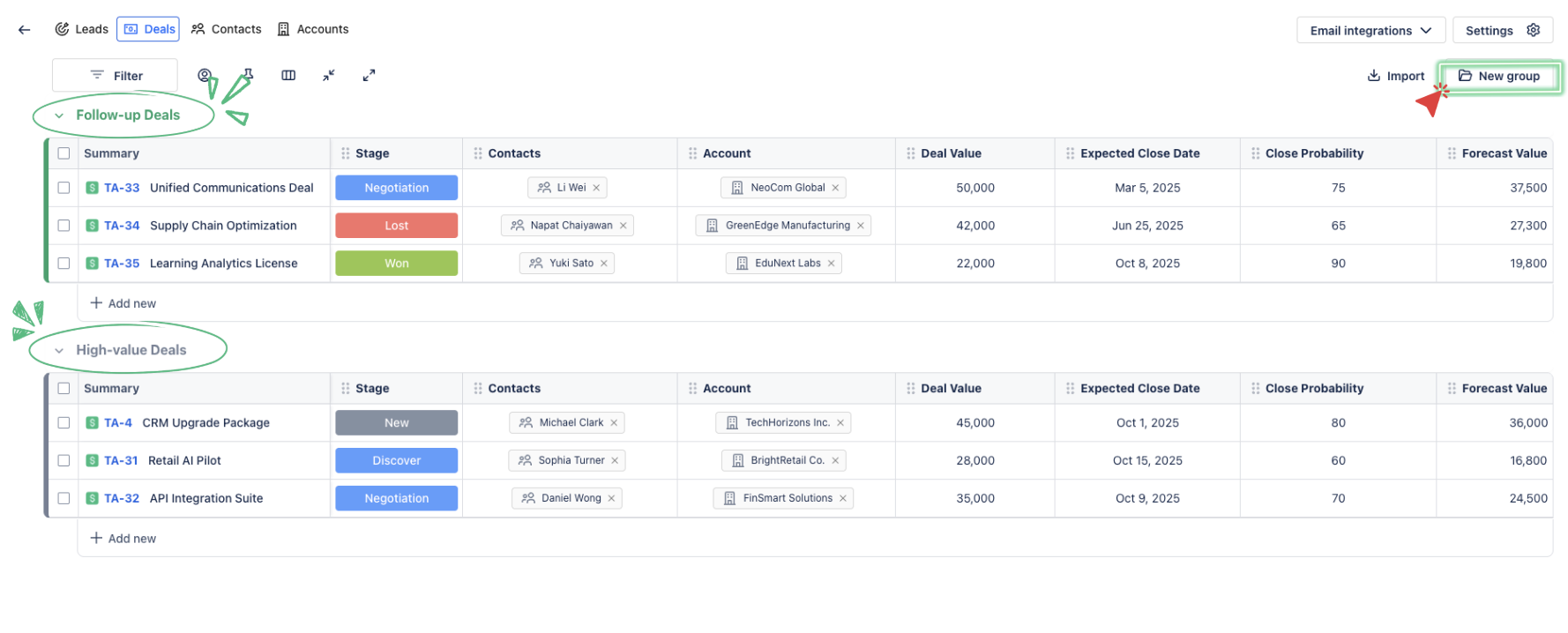
Groups are used to organize your Deals into logical categories. This feature helps you track deals based on region, sales team, product, or any other relevant category.
-
Simply click on
-
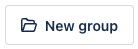
Groups can be reordered by dragging and dropping (

-
3. Track Key Information
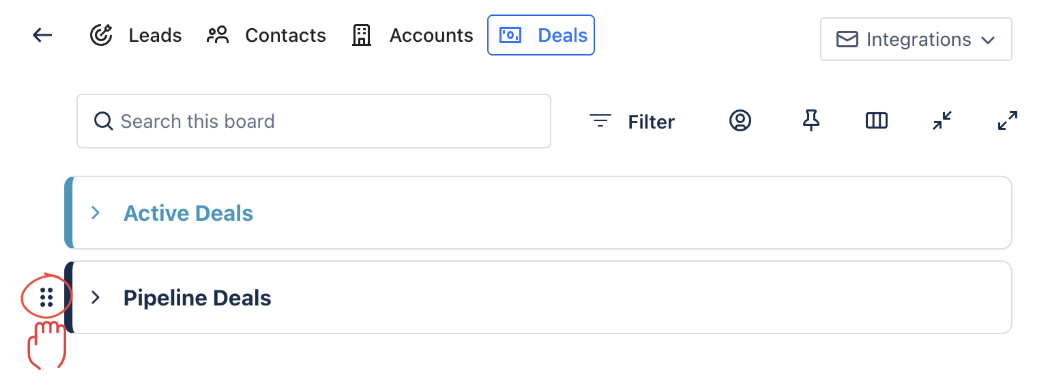
The Deals board provides an overview of each Deal’s details through columns such as:
-
Summary: Name or identifier of the Deal.
-
Stage: The current stage of the Deal in your sales pipeline (e.g., Discovery , Proposal , Negotiation , Won , Lost ).
-
Contacts: The Contact associated with the deal, which represents the individual working on the deal or leading the negotiations.
-
Account: The Account (organization) associated with the Deal. The Account provides context and helps link multiple Deals to the same organization.
-
Deal Value: The potential monetary value of the Deal.
-
Expected Close Date: The anticipated date of closing the Deal.
-
Close Probability: The likelihood of the Deal closing successfully.
-
Forecast Value: An estimated value of the Deal based on current information.
The Relationship between Deals, Contacts, and Accounts
Typically, a Deal represents a sales opportunity, involving negotiations or discussions about products or services. Deals are directly tied to both an Account (the organization) and a Contact (the person within the organization).
In Sales & CRM for Jira:
-
Accounts represent the organization with whom you’re doing business.
-
Contacts represent the individuals you’re working with in that organization.
-
Deals represent the specific sales opportunities or projects being discussed with that Account and Contact.
For example, if your company is negotiating a CRM Upgrade Package with TechHorizons Inc. and Michael Clark (the decision-maker), the Deal would track the details of this sales opportunity, including the Deal Value, Expected Close Date, and the Current Stage of the deal.
3.1. Add More Columns to the Deals Board
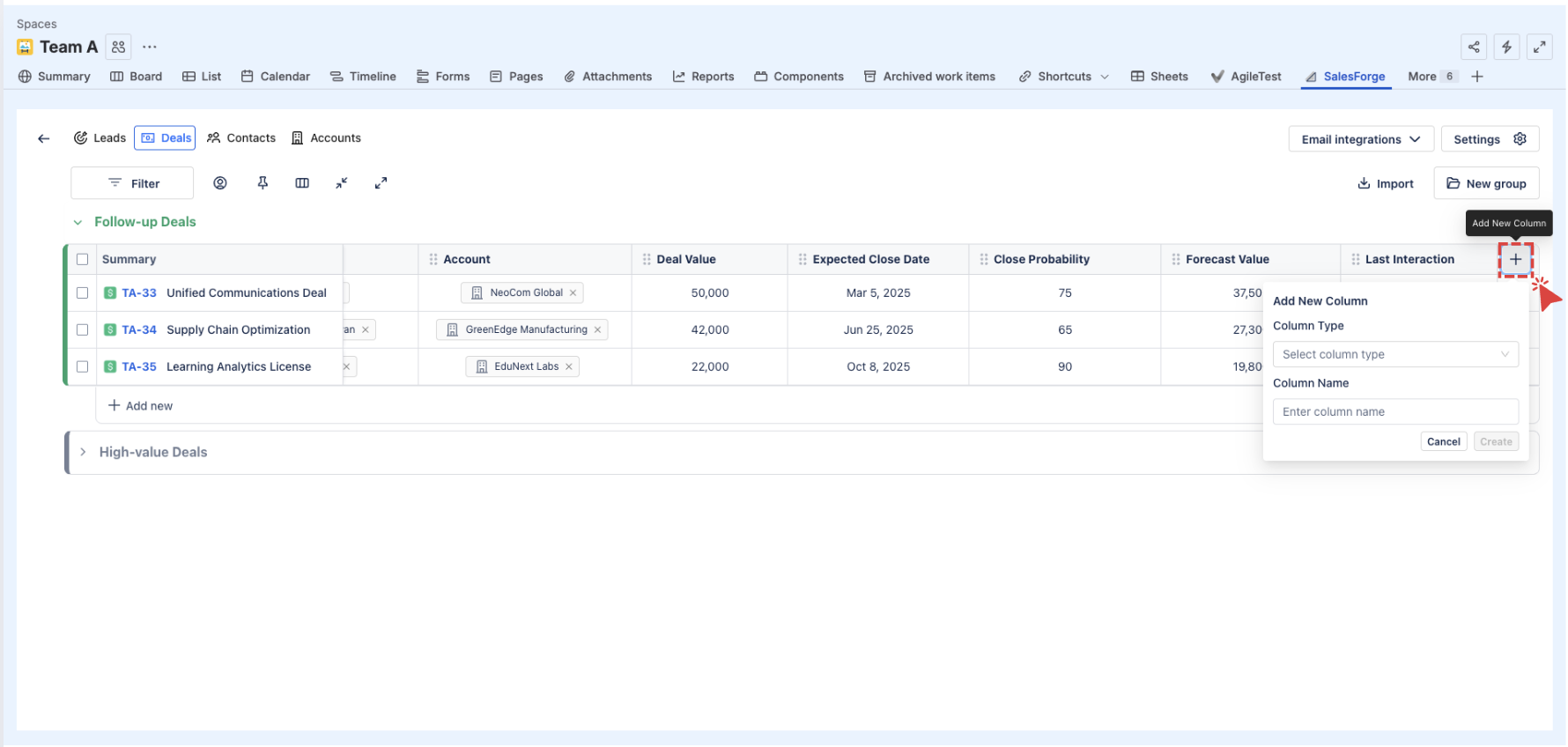
To capture additional information, you can add new columns:
-
Click

-
Choose from types like Text, Number, Email, or Date, then provide a name and click

3.2. Customize Columns
You can also customize the columns to suit your needs. Click the More options (...) icon next to any column header to see the available settings.
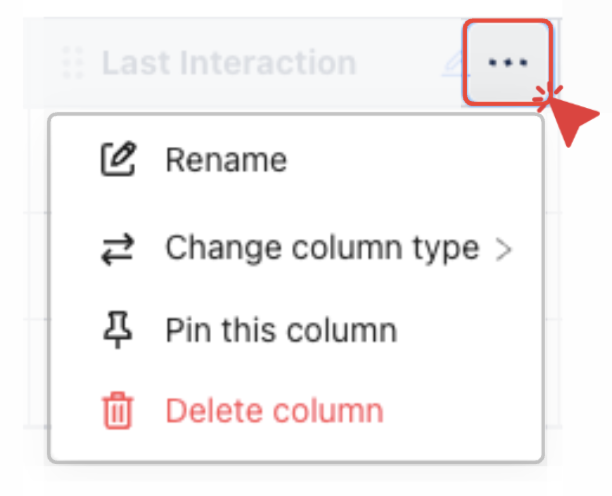
Here is what you can do:
a. General Actions (All column types)
-
Rename a Column: Click on the :pen: Edit button to change the title of the column header.
-
Change Column Type: Select

-
Pin this Column: Select

-
Delete a Column: Select
b. Specialized Column Settings
Sales & CRM allows you to customize how values are displayed in Number 
Here is how:
-
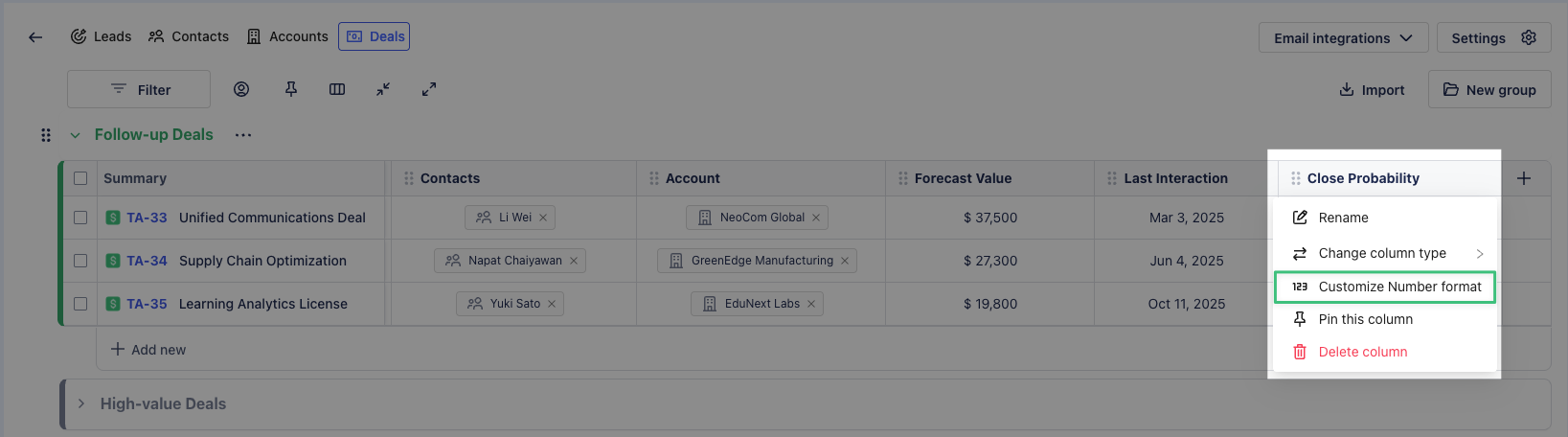
Locate a column with the Number
-
Click the More options (···) button next to the column header and select

-
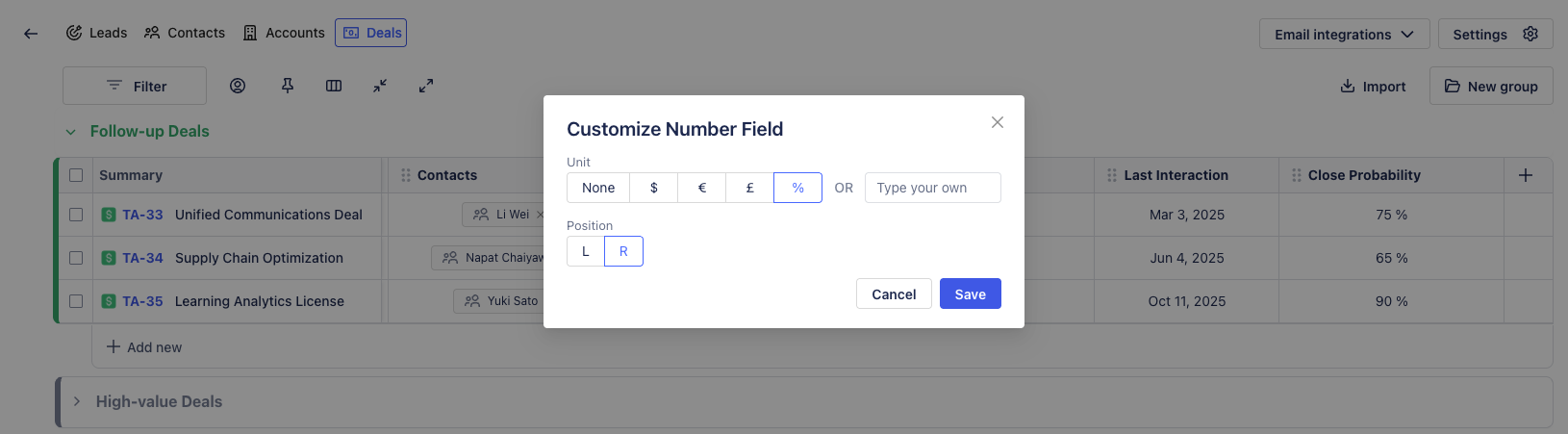
In the Customize Number Field dialog:
-
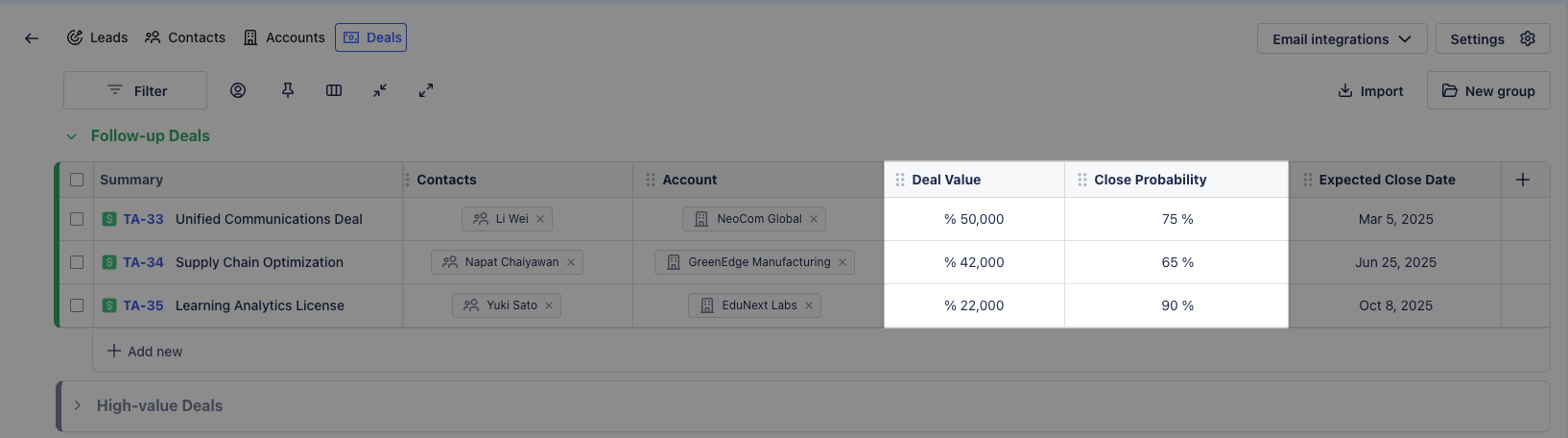
Select a Unit: Choose a preset symbol ($, €, £, %) or select Type your own to add a custom label (e.g.,
cmorseats). -
Set Position: Choose L (Left) to place the unit before the number (e.g.,
$50,000) or R (Right) to place it after (e.g.,75%). -
Click Save to apply the changes.
-
The selected format will be applied instantly to all values in that column.
Example Use Cases
-
Display Deal Value as a currency (e.g.
$50,000) -
Show Close Probability as a percentage (e.g.
75%)