.png)
1. Overview
The Exploratory Test feature in AgileTest is designed to support flexible, session-based testing. It allows QA teams to explore the application freely while capturing findings, observations, and results in real time.
Unlike Classic Tests that require structured test steps prepared in advance, Exploratory Tests allow QA teams to investigate features dynamically, think critically during execution, and document what they discover throughout the session.
Here is the comparison table between Exploratory Test and Classic Test
|
|
Classic Test |
Exploratory Test |
|---|---|---|
|
How it work as |
Structured test cases with predefined steps and expected results |
A session to freely explore the product using their experience and real-world user behaviors. |
|
Preparation |
Preconditions, test steps, sample data, expected results |
No predefined steps required |
|
Setup Process |
|
|
|
Documentation |
Test Execution Results can be tracked in Milestone, Dashboard, and Reports. |
Test Session Results can be tracked in Milestone. |
|
When to choose |
|
|
While Classic Test is ideal for structured validation and formal documentation, Exploratory Test is best when you need to:
-
Discover issues quickly without writing detailed steps first.
-
The feature is new, unclear, or rapidly changing.
-
Allow testers to apply experience and domain knowledge.
Instead of choosing only one method, many QA teams combine both. Teams can use Exploratory Test to investigate, learn the system, and uncover hidden defects. Then, they can convert critical or repeatable scenarios into Classic Test Cases for long-term regression and documentation.
To find Exploratory Test in AgileTest, go to the Exploratory Test section on the left-hand side menu bar.
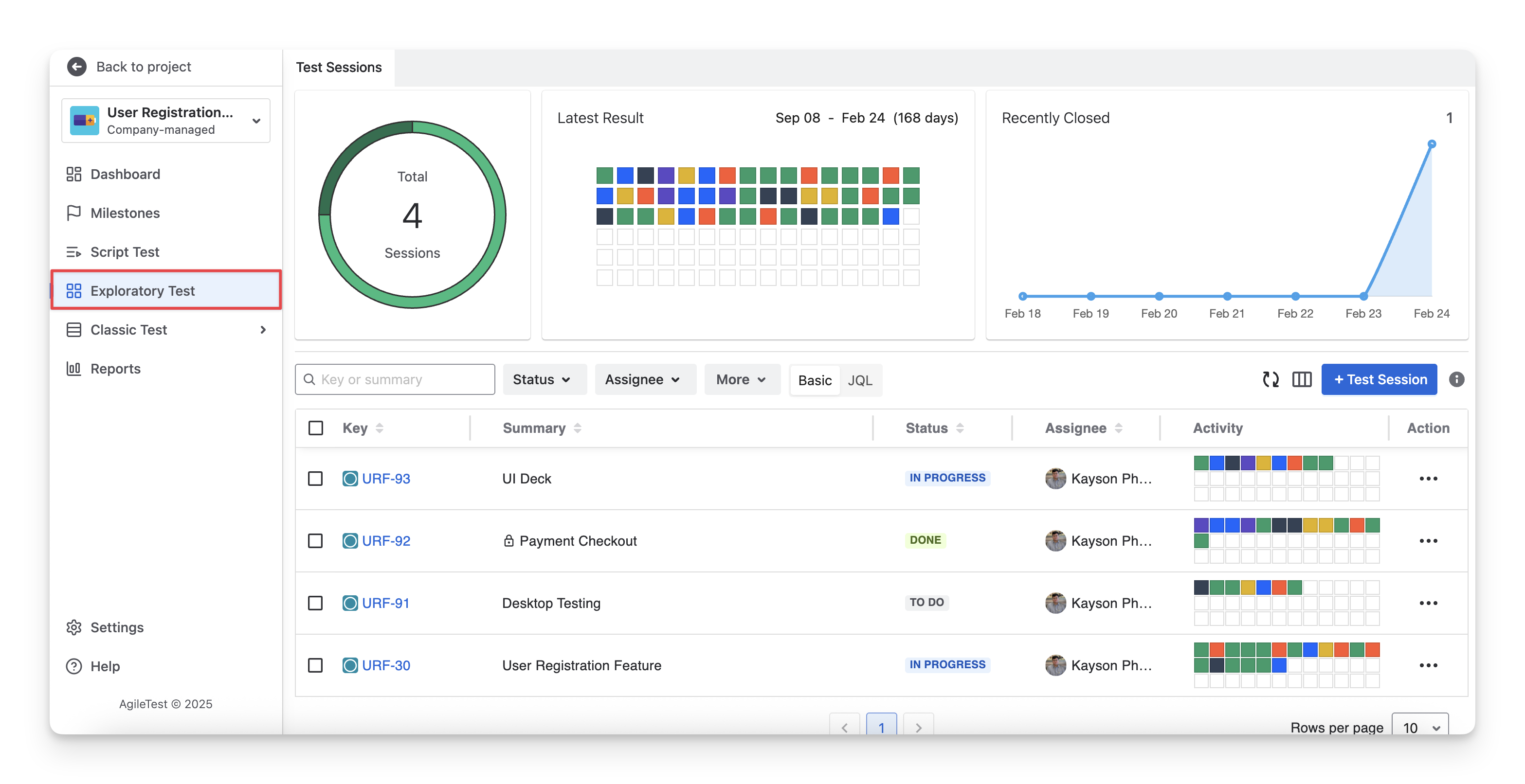
In AgileTest, each Exploratory Test is also a Jira work item.
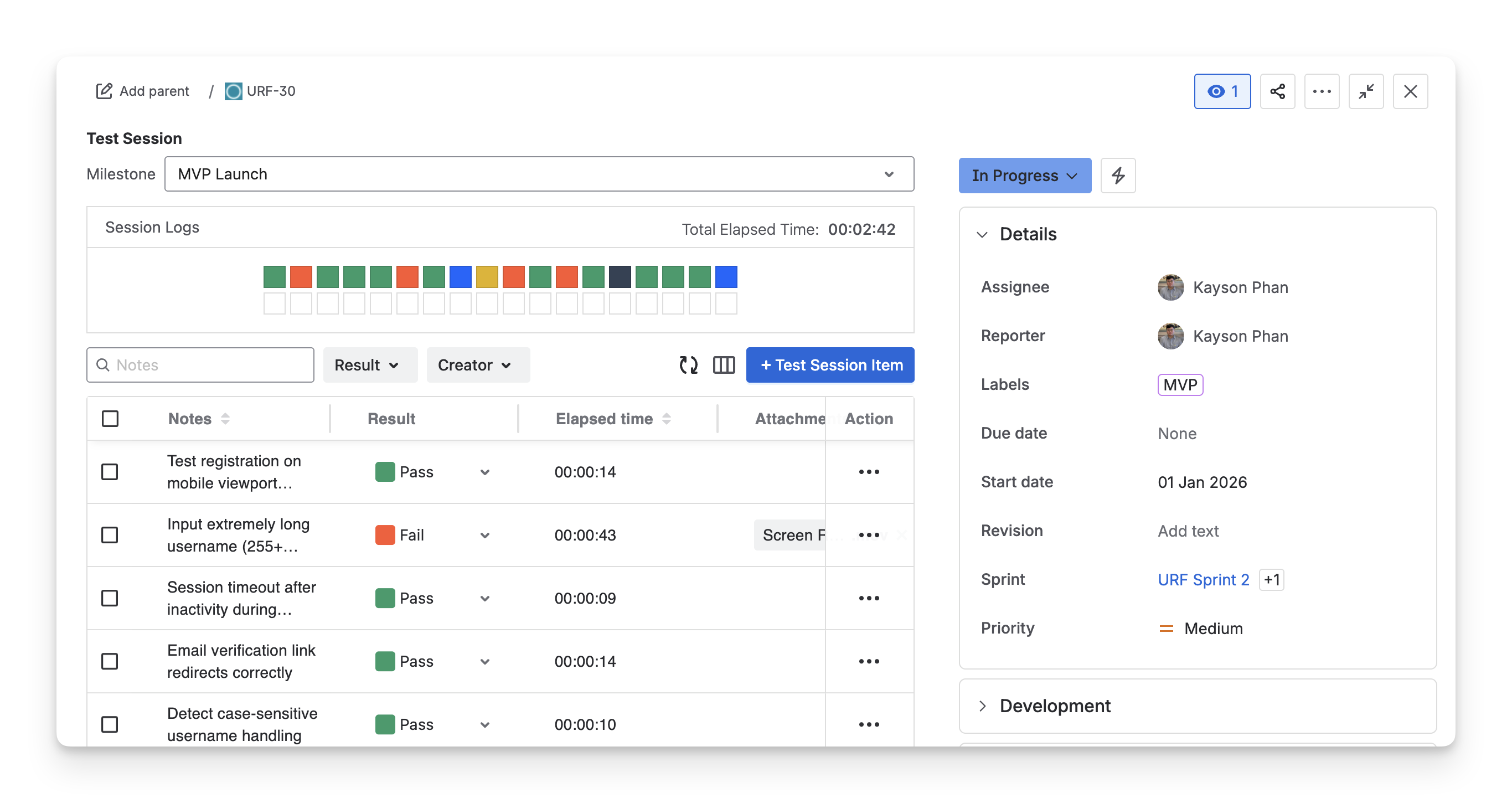
Check out this video below of how testers can utilize Exploratory Test feature to apply exploratory test and ad-hoc test with AgileTest.
2. Locate Exploratory Tests
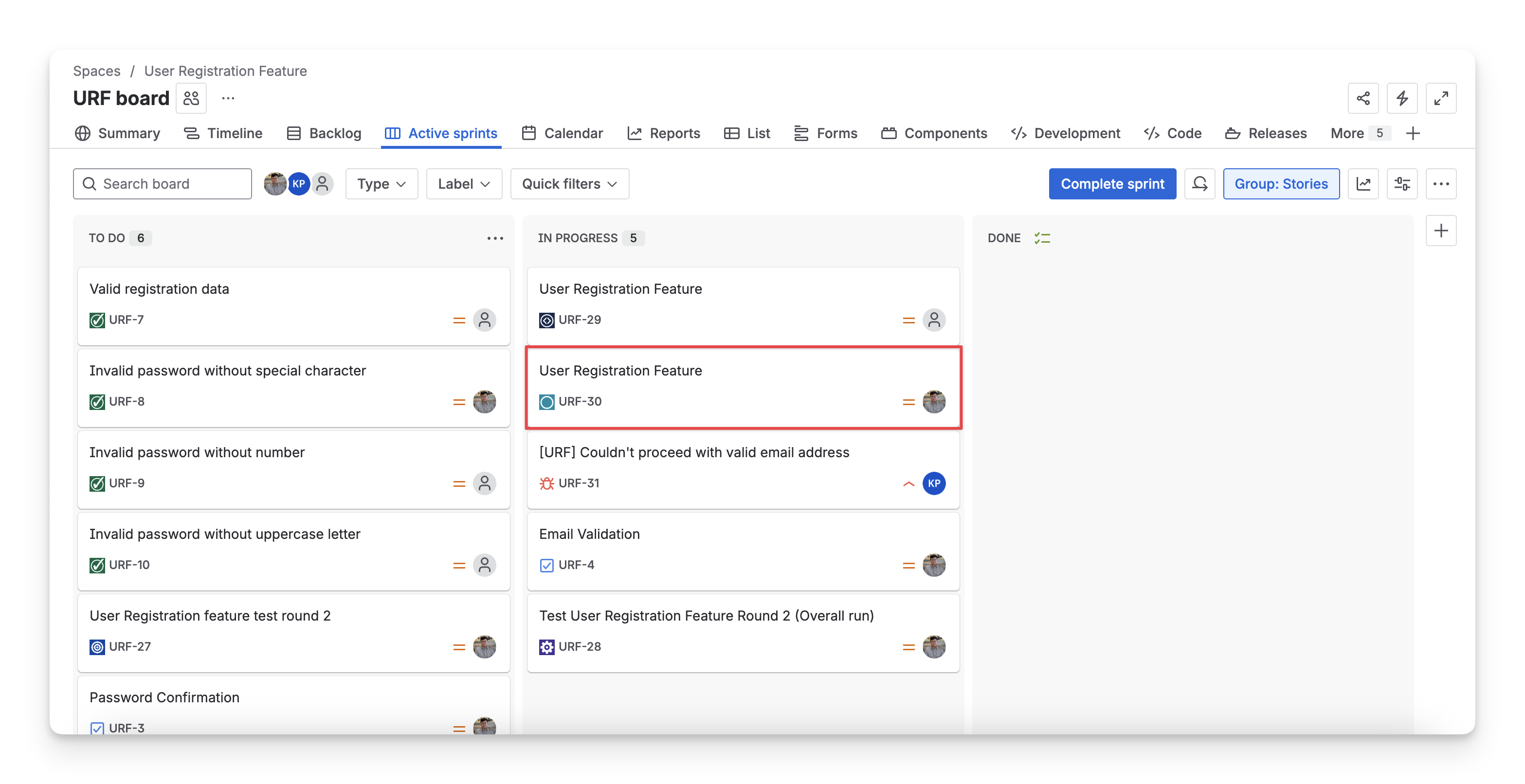
You can find your exploratory tests in 2 areas: AgileTest Exploratory Test Section and Jira Sprint Board.
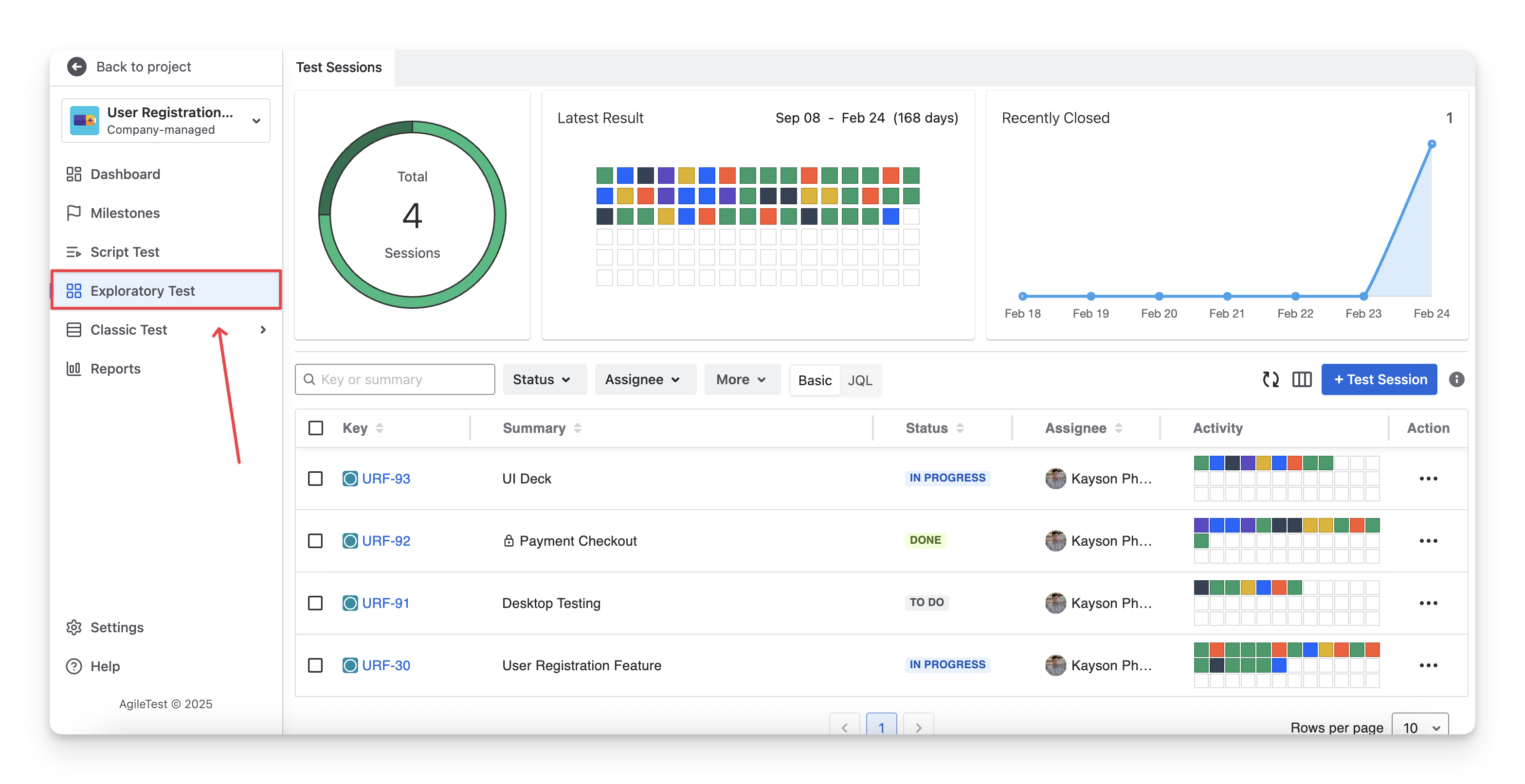
2.1 Find Exploratory Tests In AgileTest
On the left menu sidebar, navigate to the Classic Test section → Choose Exploratory Test.
2.2 Find Exploratory Tests In Jira
On your Jira Sprint View board, you can find these exploratory tests as Jira work items.
To enable AgileTest widget panel, you can follow these steps:
-
Open a Jira test session issue
-
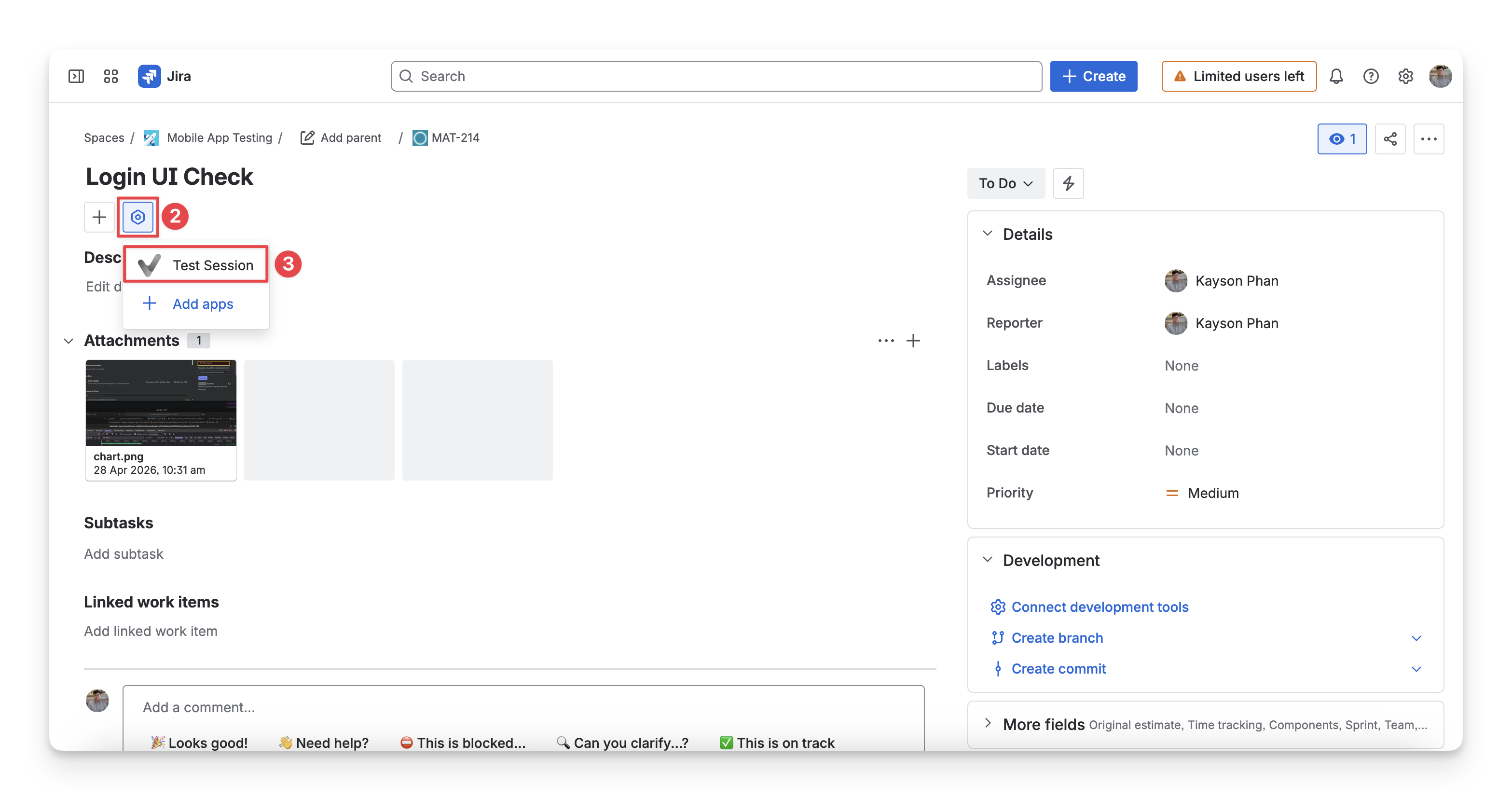
Click the View apps action next to the issue summary
-
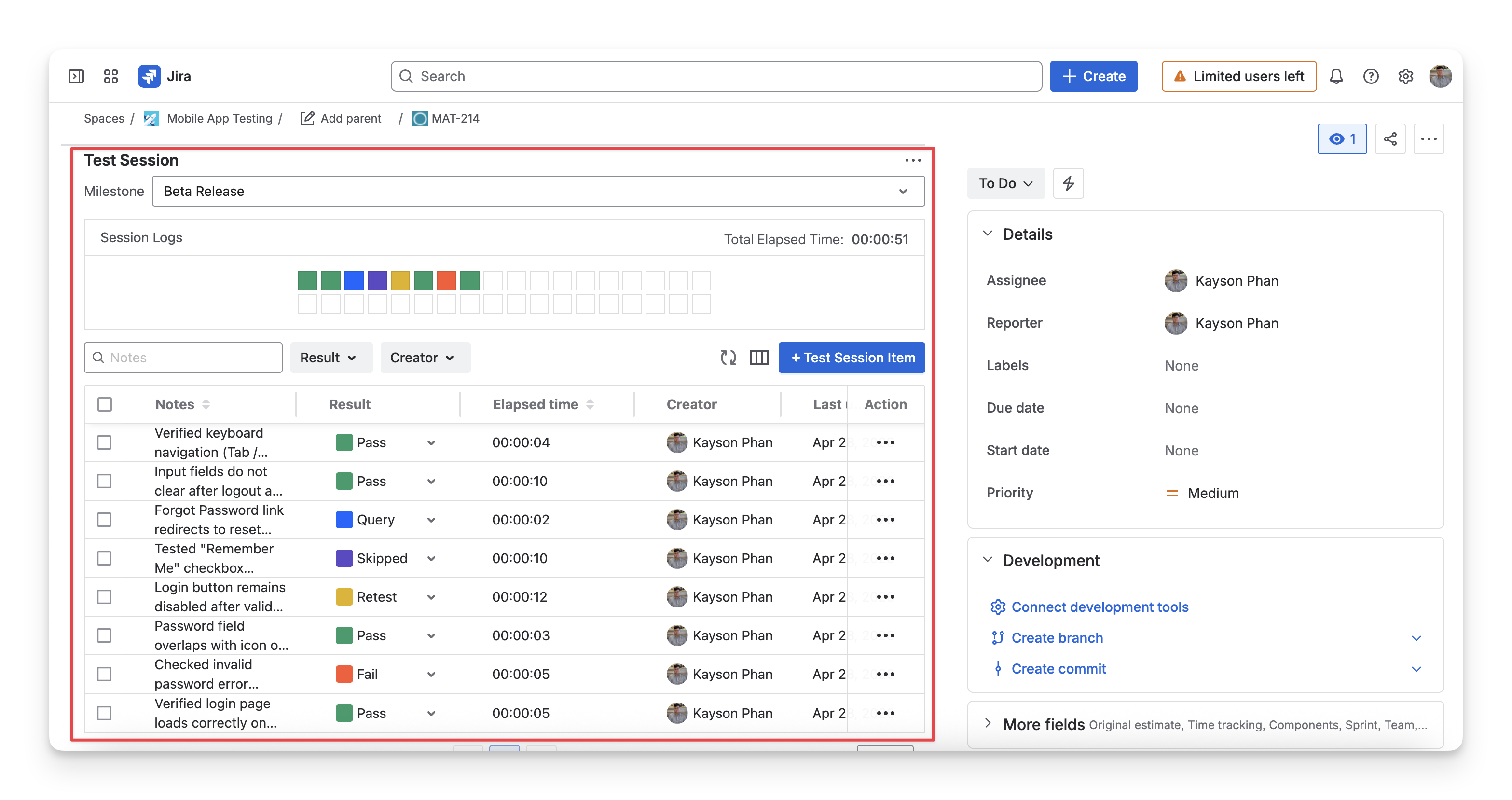
Select Test Session with the AgileTest icon. The widget UI should then appear below the issue content.
-
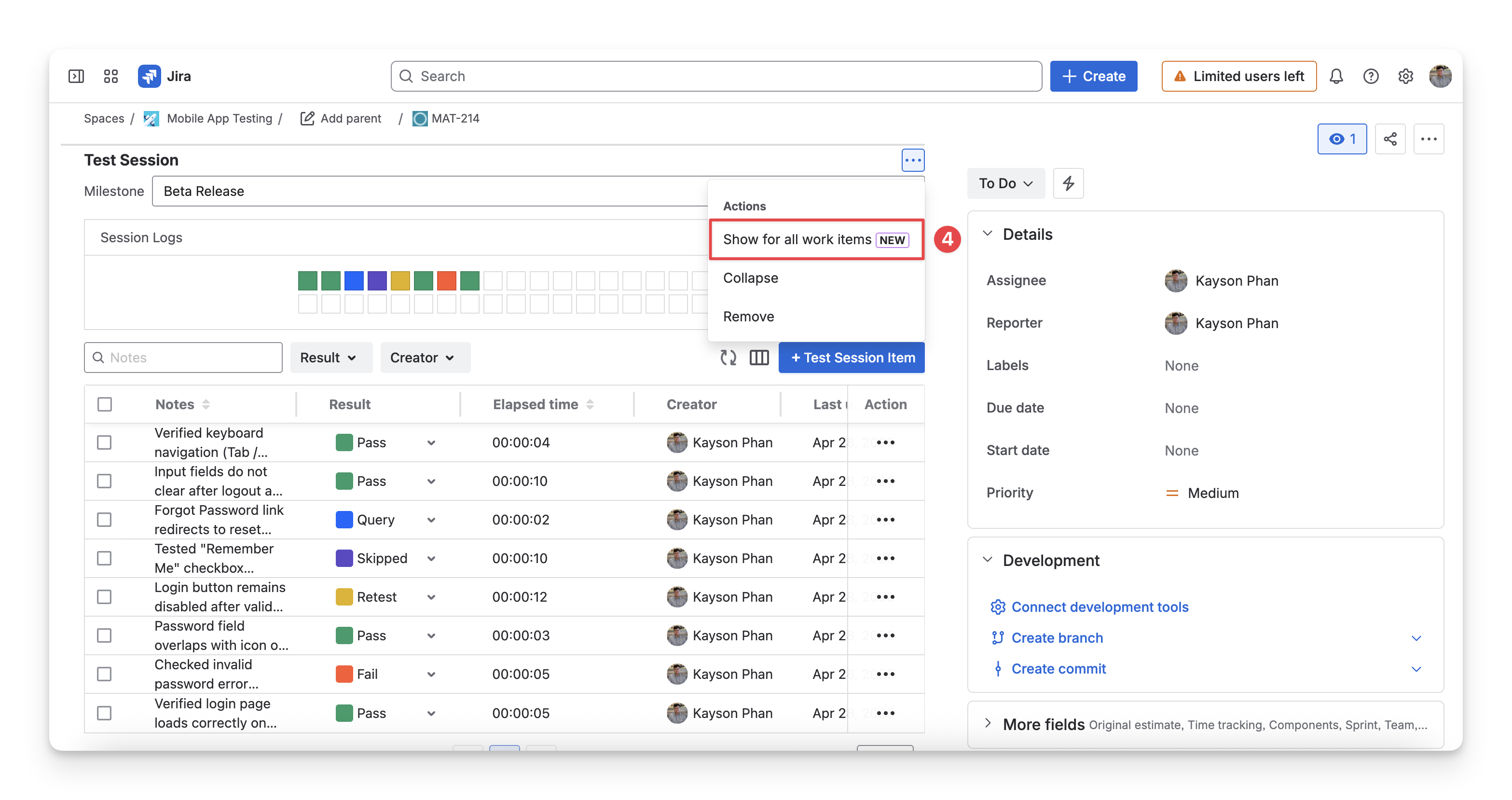
You can display the widget automatically for all work items of the same type by clicking the 3-dot menu in the widget UI, then selecting the Show for all work items option.
3. Create New Exploratory Tests
-
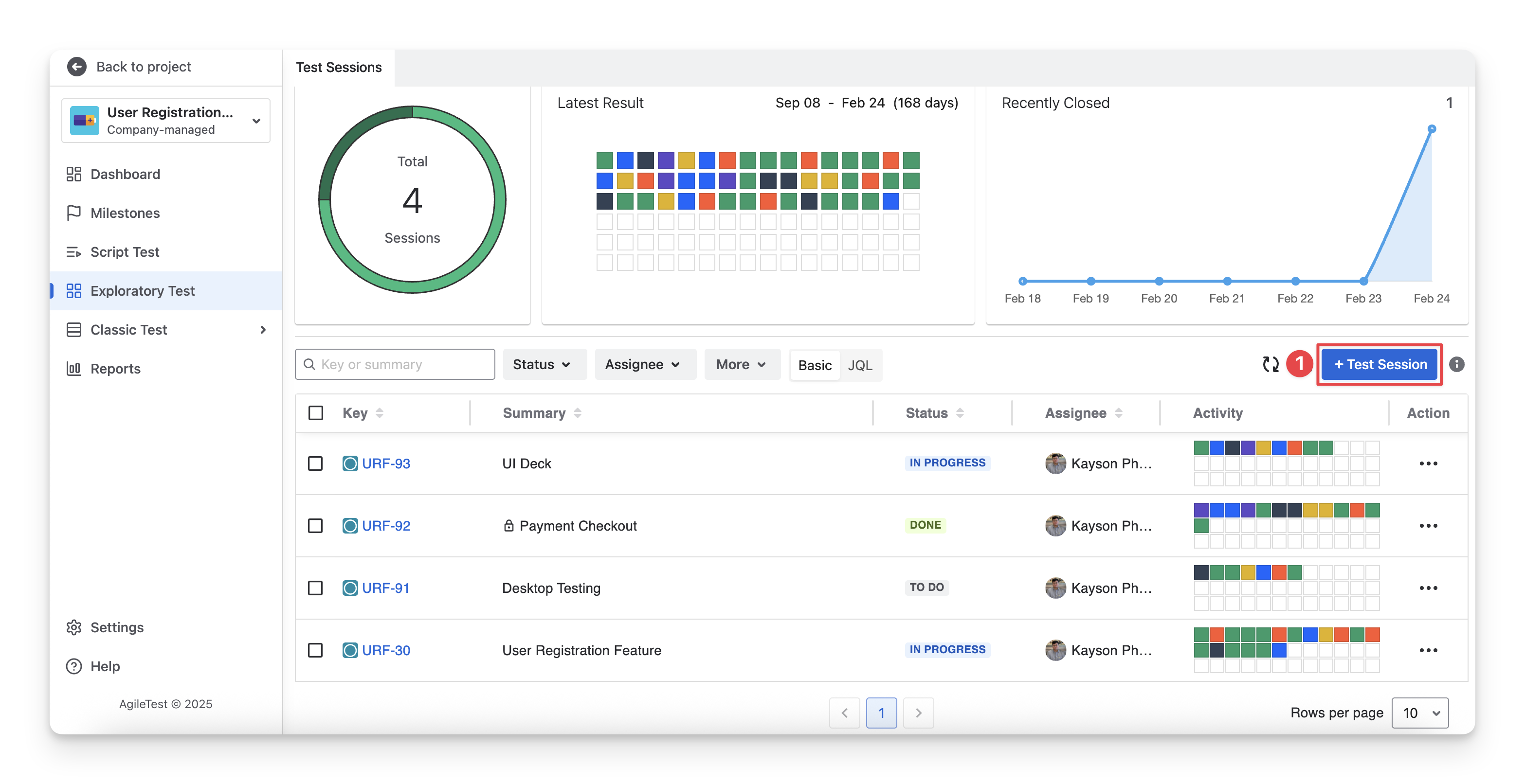
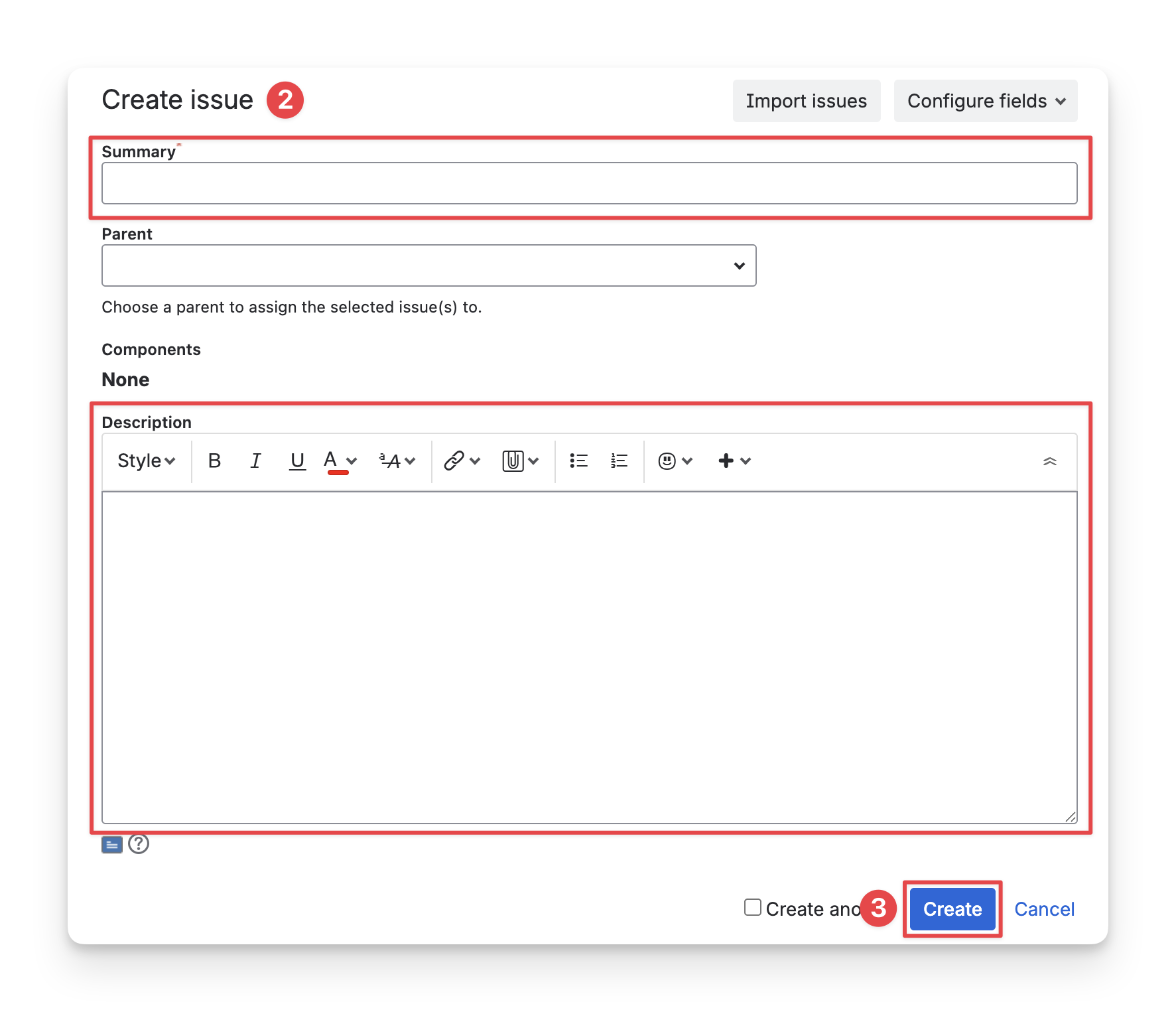
Inside the Exploratory Test section, click on the “+ Test Session” button.
-
Fill in the exploratory test details.
-
Summary: A clear and concise title that describes the scope of the exploratory session
-
Description (Optional): Additional context for the session, such as testing objectives, scope boundaries, environment details, etc.
-
Click on the “Create” button to finish.
How to Create Multiple Exploratory Tests Without Repeating the Process
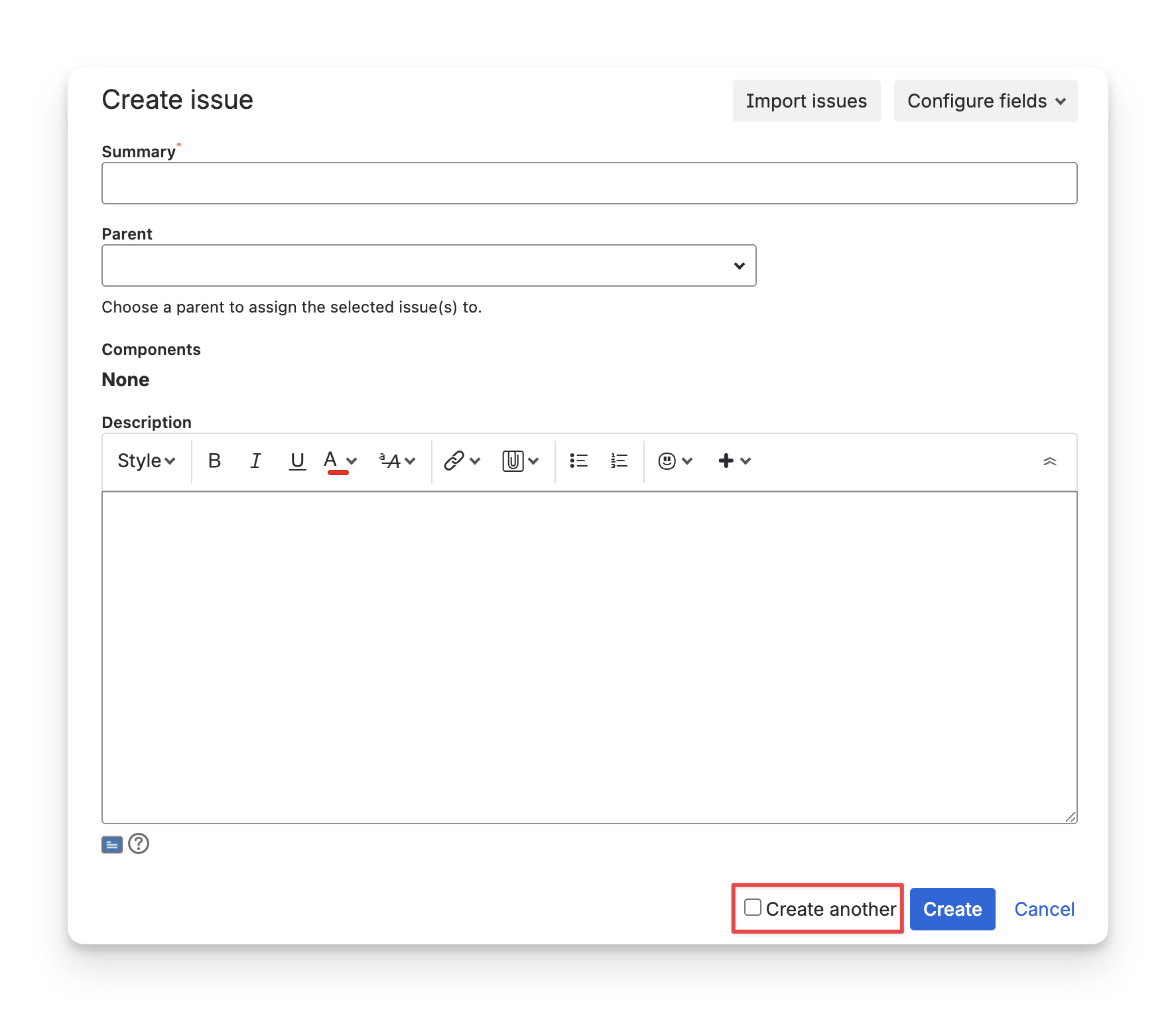
Follow the same steps used to create the first exploratory tests. In the 3rd step, select “Create another” instead of clicking “Create”.
This keeps the dialog open after the exploratory test is created, allowing you to continue creating and editing additional exploratory tests without reopening the dialog each time.
Explore more about AgileTest Exploratory Tests
Should you need any assistance or further AgileTest inquiries, contact our 24/7 Support Desk!