.png)
Workload management helps you visualize how tasks are distributed across your team. By comparing assigned hours to available capacity, you can avoid overbooking, balance workloads, and ensure smoother project execution.
In TeamBoard ProScheduler, workload is calculated by comparing:
-
Scheduled hours: The total number of hours assigned to a resource for specific tasks.
-
Resource capacity: The maximum number of hours a member is expected to work in a day or week (e.g., 8h/day).
To configure and manage resource capacity across your organization, go to the Working Capacity section in App Settings.
Viewing workload
How to enable workload view
-
Navigate to the Schedule Board from the tab bar.
-
In the upper-right corner, click

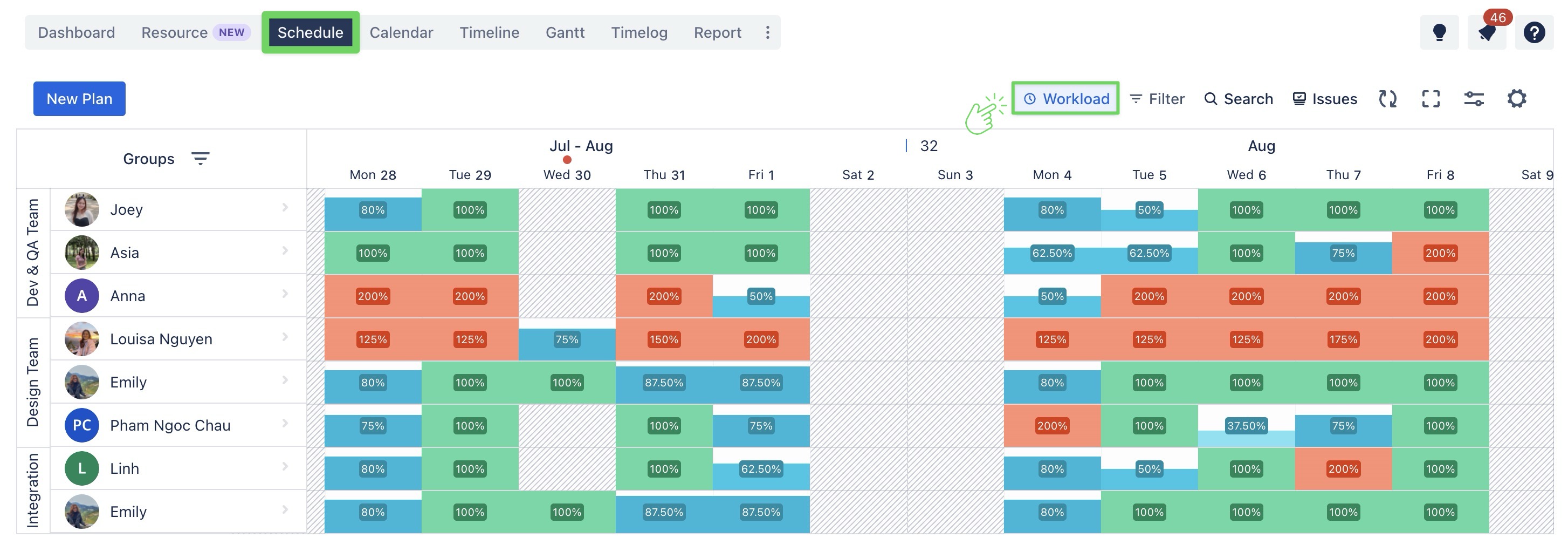
Workload view mode
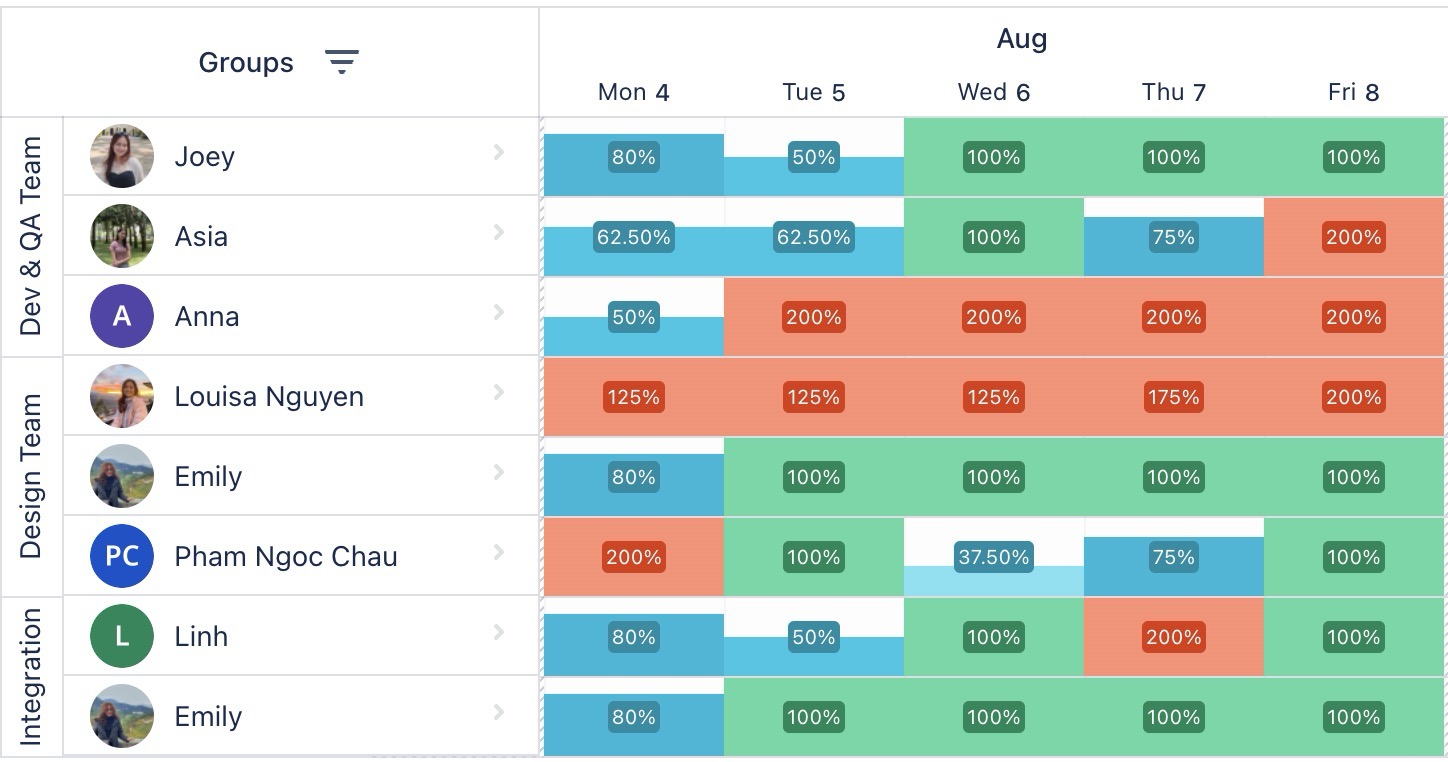
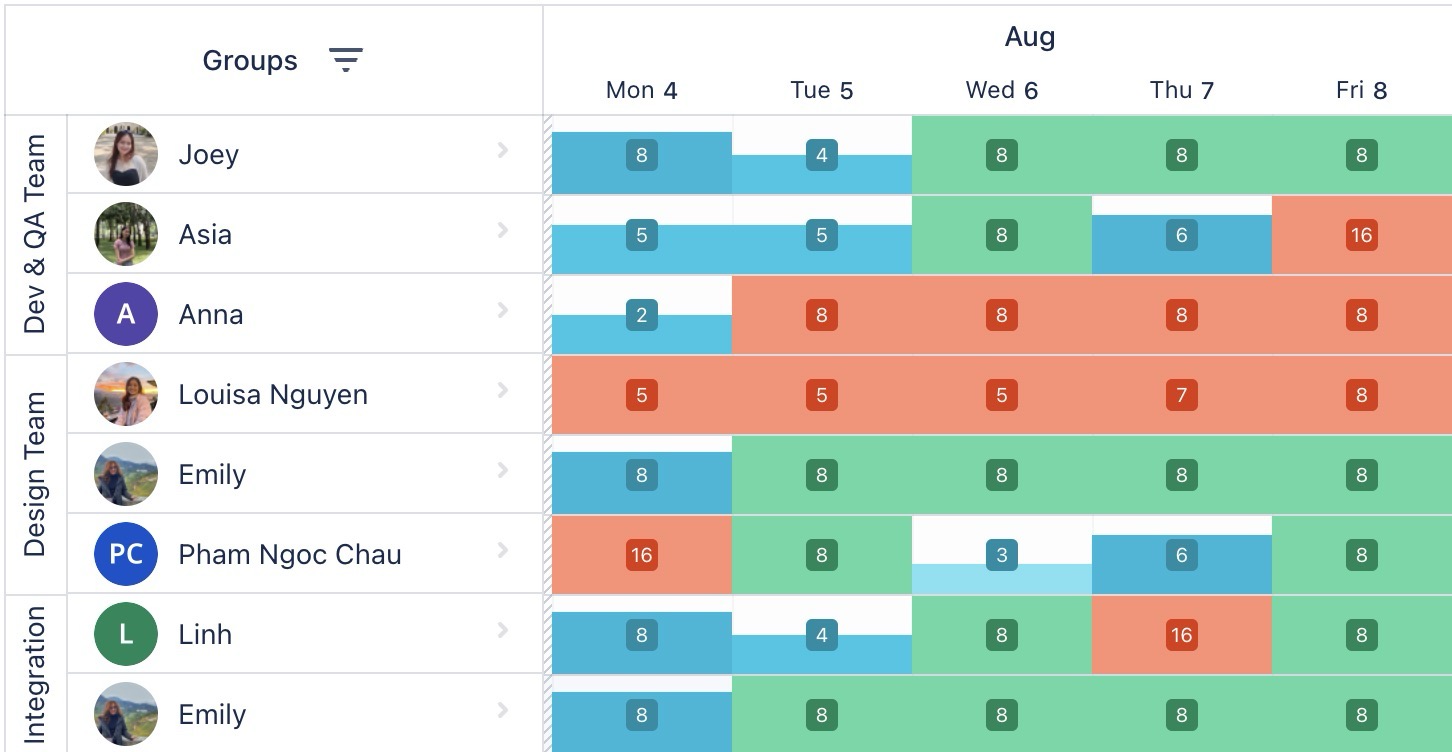
You can configure the workload view to display either hours or percentages, based on your preference, to better track and manage task allocation.
To configure how the workload mode is displayed on the Board, go to the Workload View section in General settings.
Understanding the workload indicators
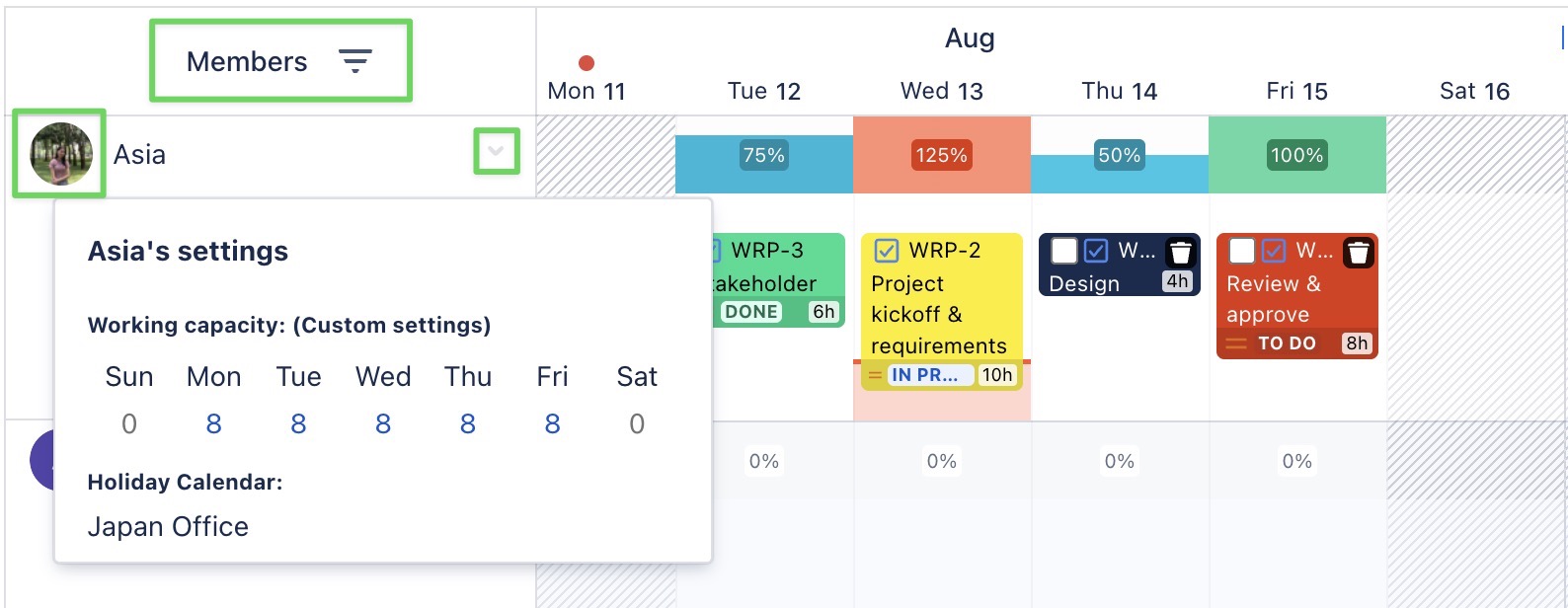
The color coding system helps you visually track the workload of each team member. By looking at the colors on the Schedule Board, you can quickly determine whether a team member is under-booked, fully booked, or overloaded for the day. Here's what each color represents:
Red Indicator : Overloaded Workload
The person has more tasks assigned than they can handle within a day. This indicates they are overloaded, and their workload exceeds their capacity for that day.
Example
Scheduled Hours: 10 hours of tasks are planned for the day.
Working Capacity: The daily capacity is 8 hours.
→ The workload cell will be red, showing 125%
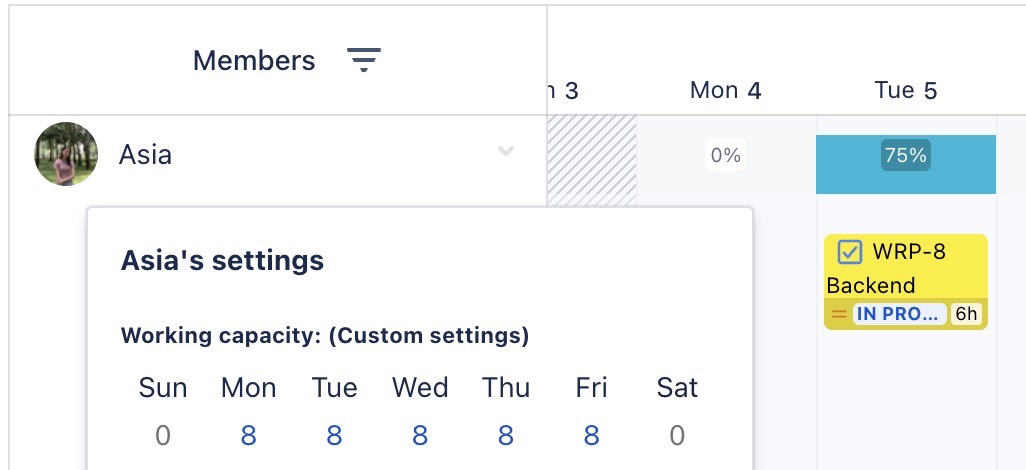
Blue Indicator : Lighter Workload
The person has fewer tasks assigned than they can handle within a day. This indicates they are underutilized, and their workload is less than their capacity for that day.
Example
-
Scheduled Hours: 6 hours of tasks are planned for the day.
-
Working Capacity: The daily capacity is 8 hours.
→ The workload cell will be blue, showing 75%.
Green Indicator : Balanced Workload
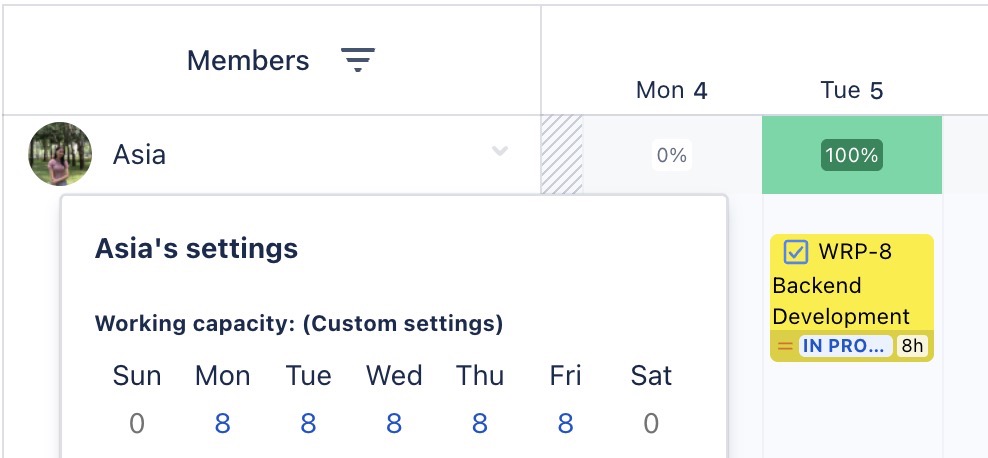
The person has tasks assigned that perfectly match their available capacity for the day.
Example
-
Scheduled Hours: 8 hours of tasks are planned for the day.
-
Working Capacity: The daily capacity is 8 hours.
→ The workload cell will be green, showing 100%.
Tips for Managing Workload
-
Click

-
Click

-
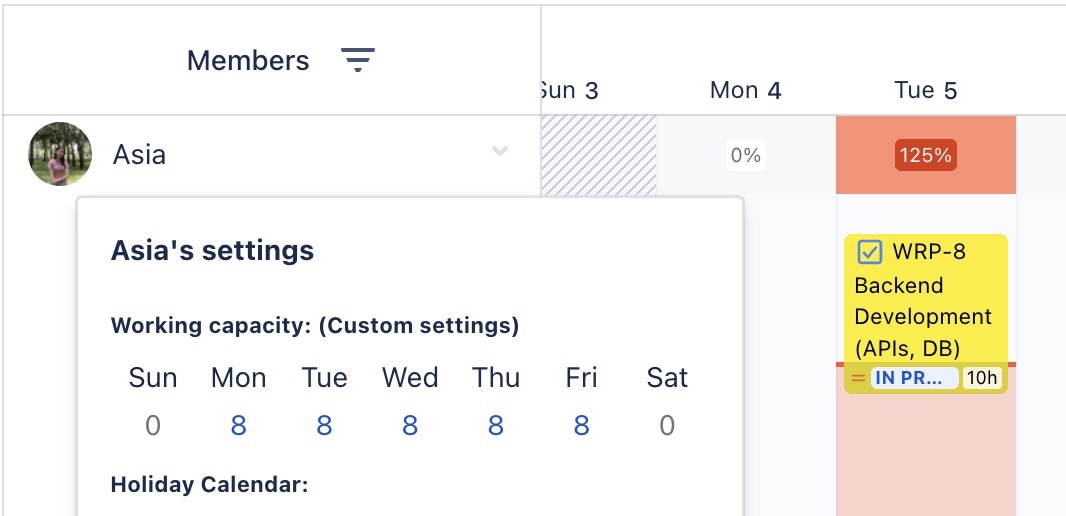
Click member avatars to see their working capacity and manage task distribution effectively.
Workload on non-working days
A non-working day is any day when a team member has no available working capacity (0 hours). This typically includes weekends, public holidays, or approved full-day leave, based on the member's configured working calendar.
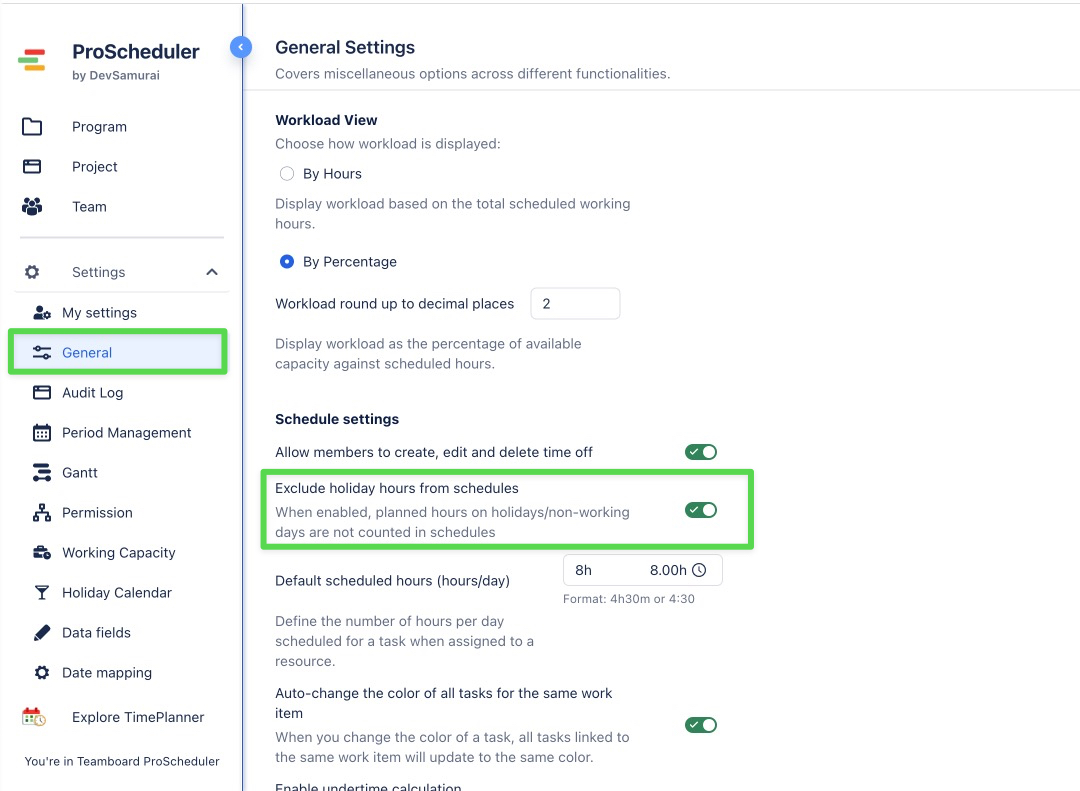
You can control whether scheduled work on non-working days is included in workload calculations using the Exclude holiday hours from schedules setting.
👉 Go to App Settings → General settings → Exclude holiday hours from schedules
When enabled
Scheduled hours that fall on non-working days are excluded from:
-
Workload view
-
Reports
-
Dashboard metrics
These hours are not included in workload calculations.
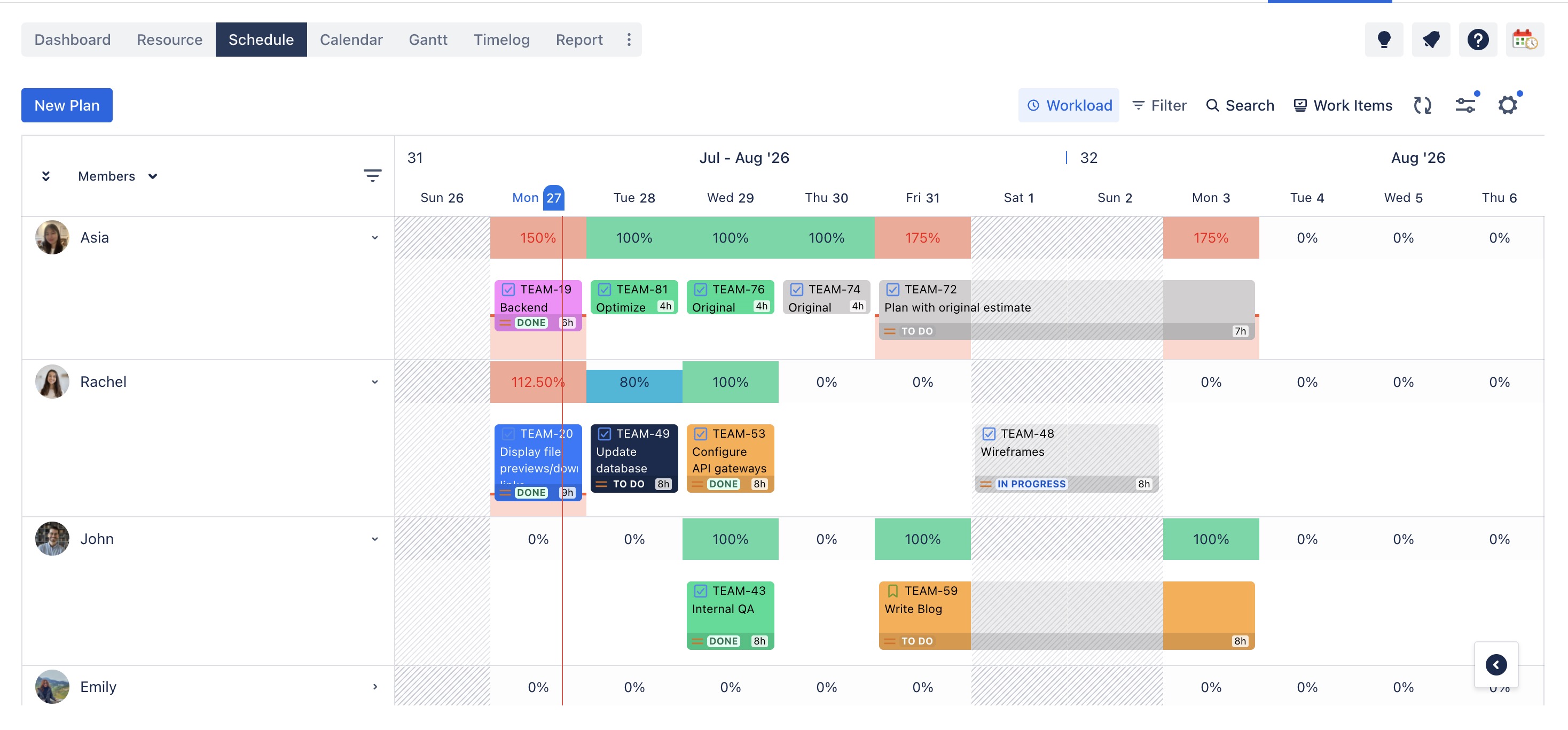
When disabled
Scheduled hours on non-working days are included in:
-
Workload view
-
Reports
-
Dashboard metrics
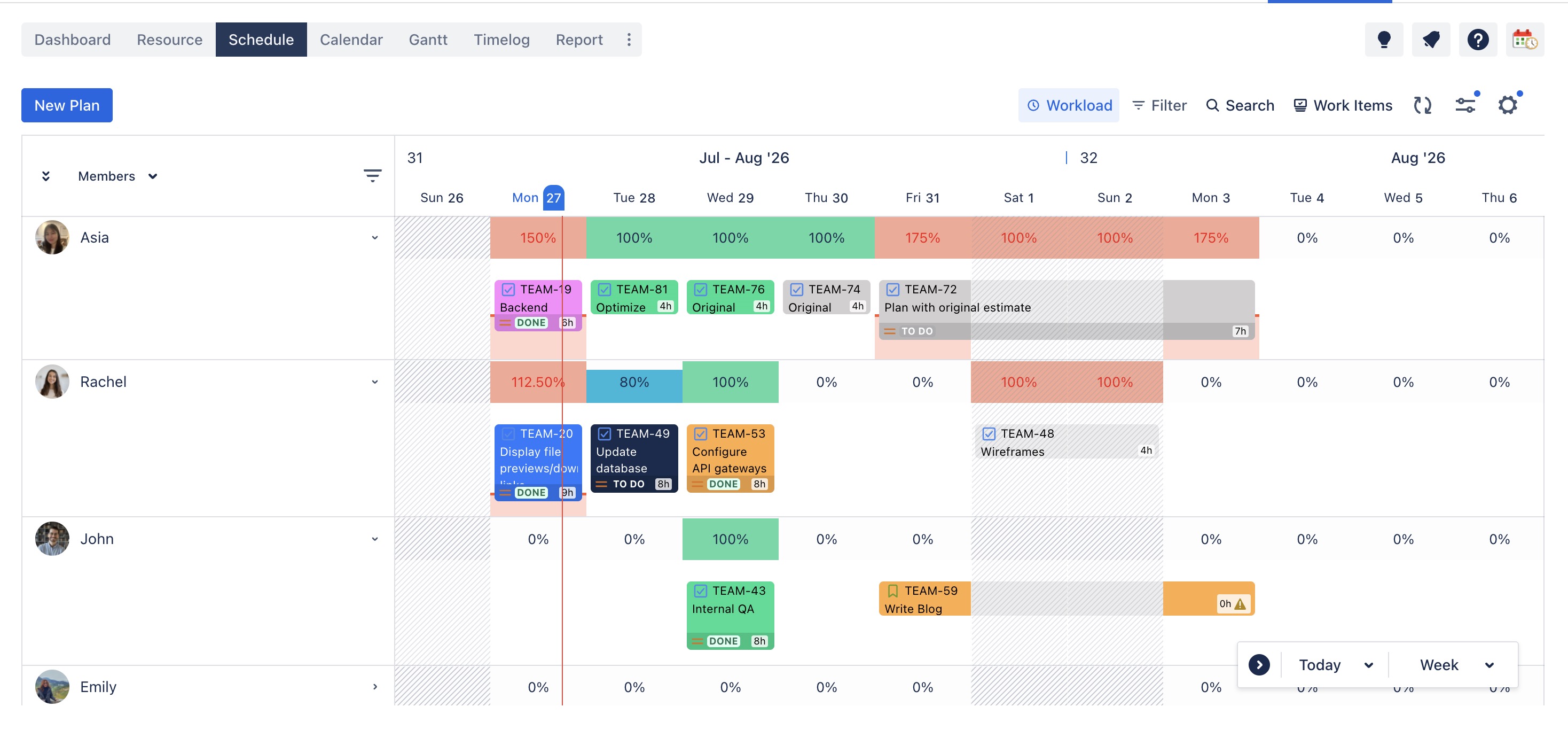
Because the member has 0 hours of capacity on those days, any scheduled work is treated as 100% overallocated, making it easy to identify planning conflicts.