.png)
All users can manage Test Execution, but only the Project and the Jira admins with the delete permission can delete it.
1. Test Execution Table Explanation
In the Test Execution screen, you can see a list of test executions with key data:
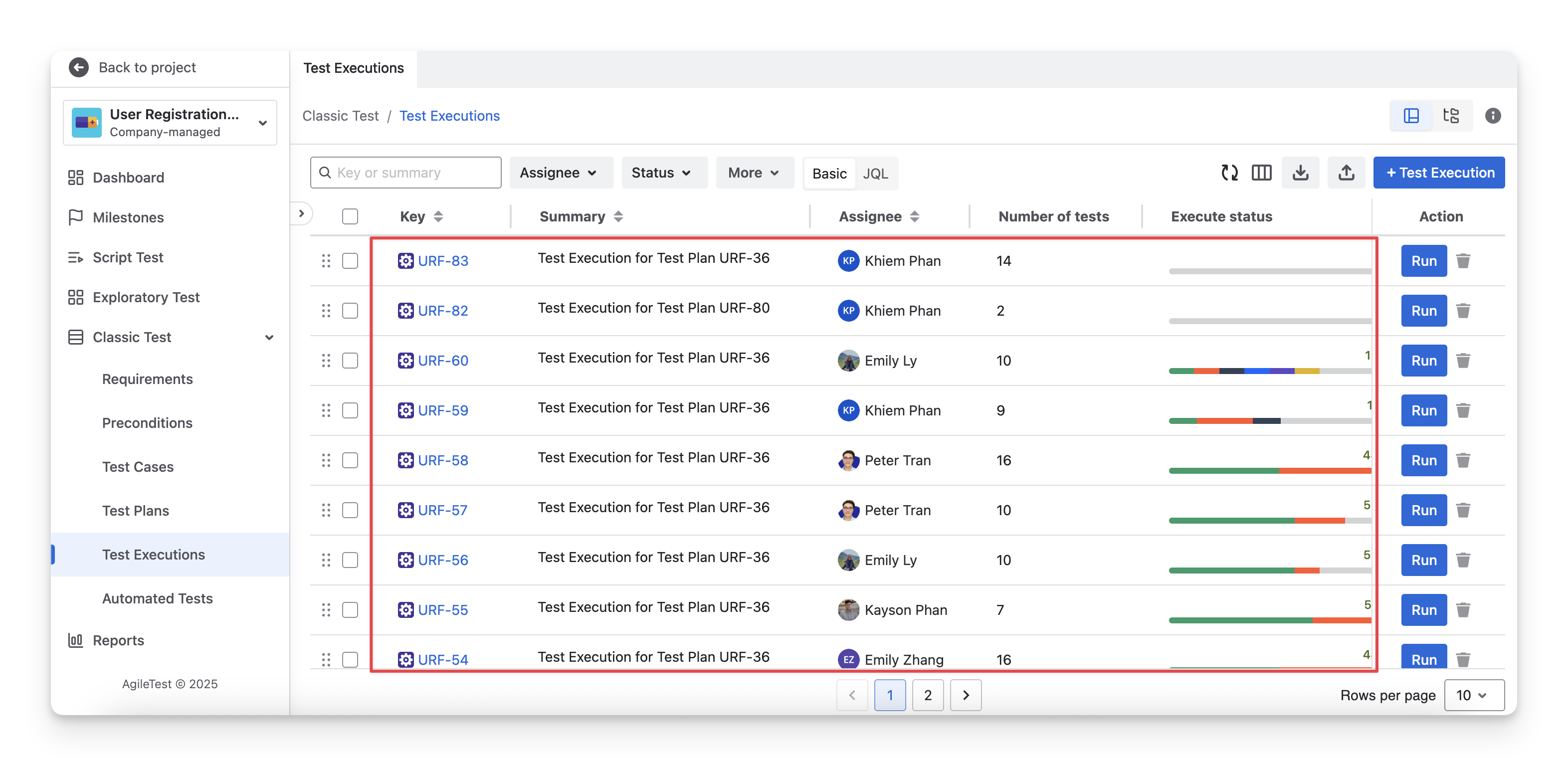
The list of test executions displays some information about:
|
Type of Information |
Description |
|---|---|
|
Key |
A Jira unique identifier for the test execution, used to track and link it. |
|
Summary |
A brief title describing the purpose or scenario of the test execution. |
|
Status |
The current Jira status of the test execution ticket ( todo ; in progress done ) indicates its lifecycle stage. |
|
Assignee |
The member who is responsible for each test execution. |
|
Number of Tests |
The number of test cases relates to execution. This helps assess coverage and distribute testing across executions. |
|
Execute Status |
The overall result of the test execution, based on test case status ( Fail pass skipped blocked query todo retest ). |
|
Priority |
The importance of test executions that help teams decide what should be run first. |
|
Reporter |
The user who created the test execution. |
|
Last updated |
The most recent date and time when the test execution was modified, reflecting the latest activity or changes. |
|
Created at |
The date and time when the test execution was first created in the system. |
2. Test Execution Table Actions
2.1 Show/Hide Column In The Table
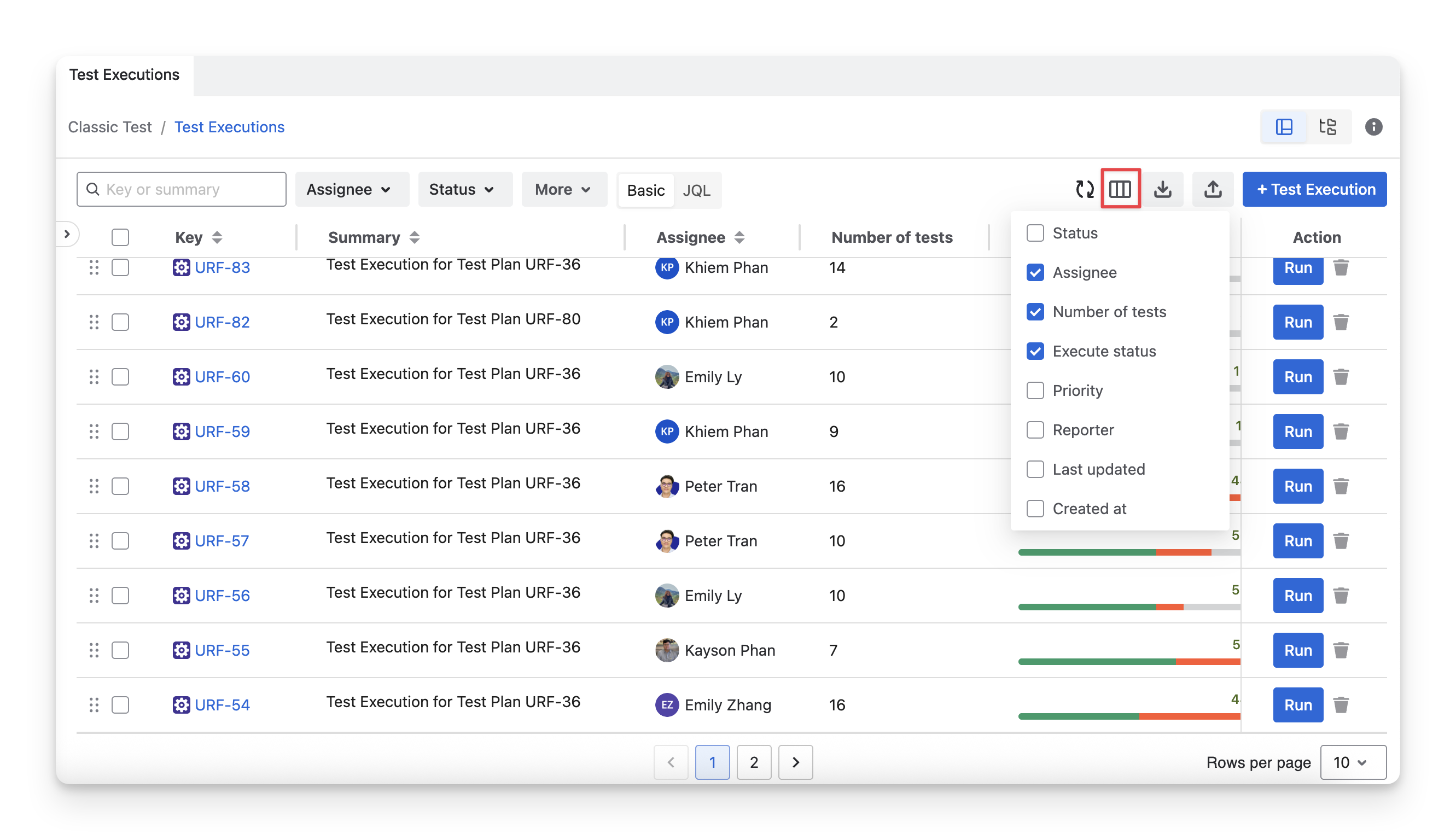
You can show or hide columns in the test execution table by clicking the “Display” button and selecting/deselecting the checkbox to display/hide the desired columns in the test execution table.
The Key and Summary Columns are two System Fields, which cannot be hidden.
2.2 Rearrange Test Execution Column Orders
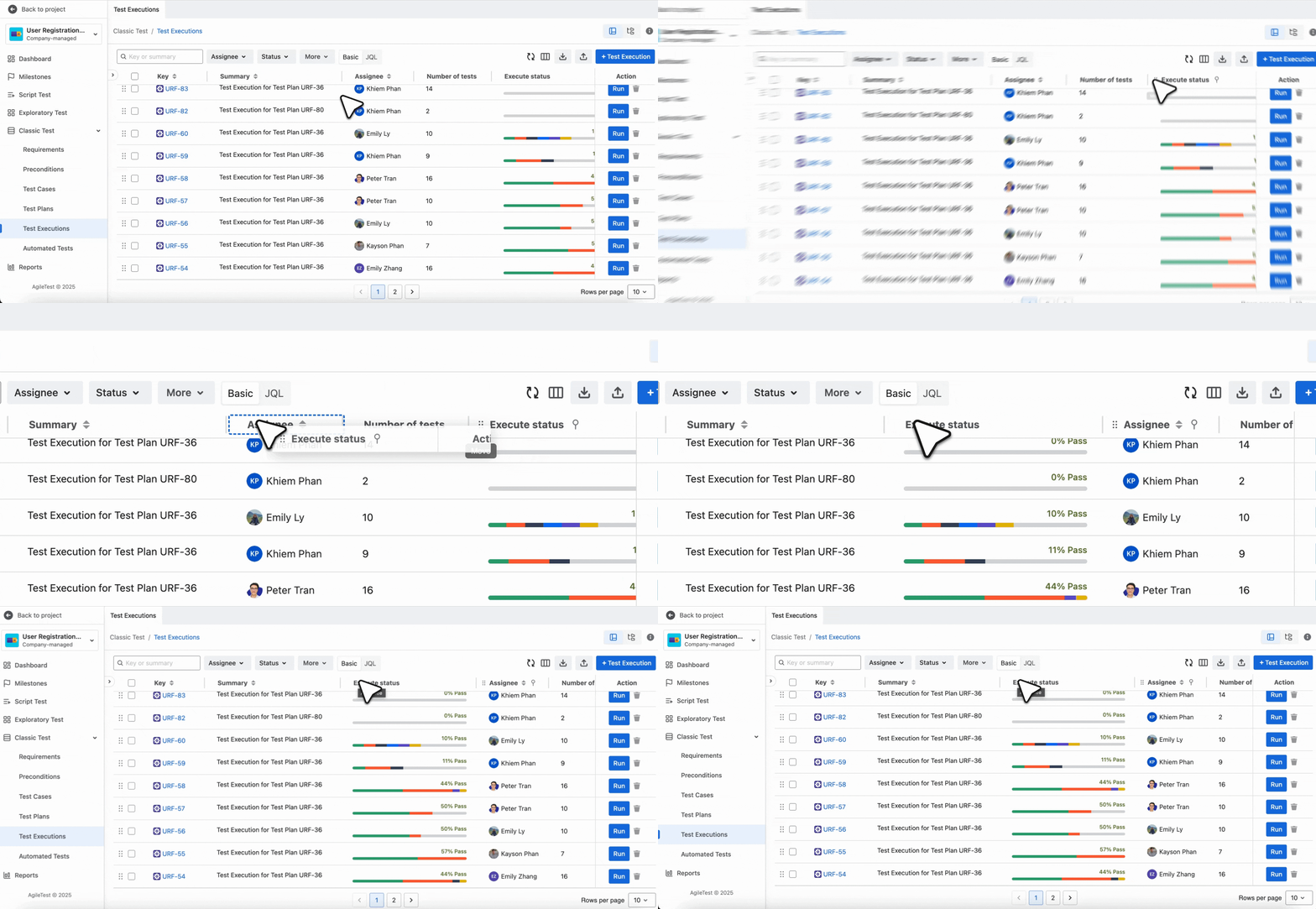
To change the display order of columns, drag and drop each column to your preferred position.
2.3 Sort Test Executions
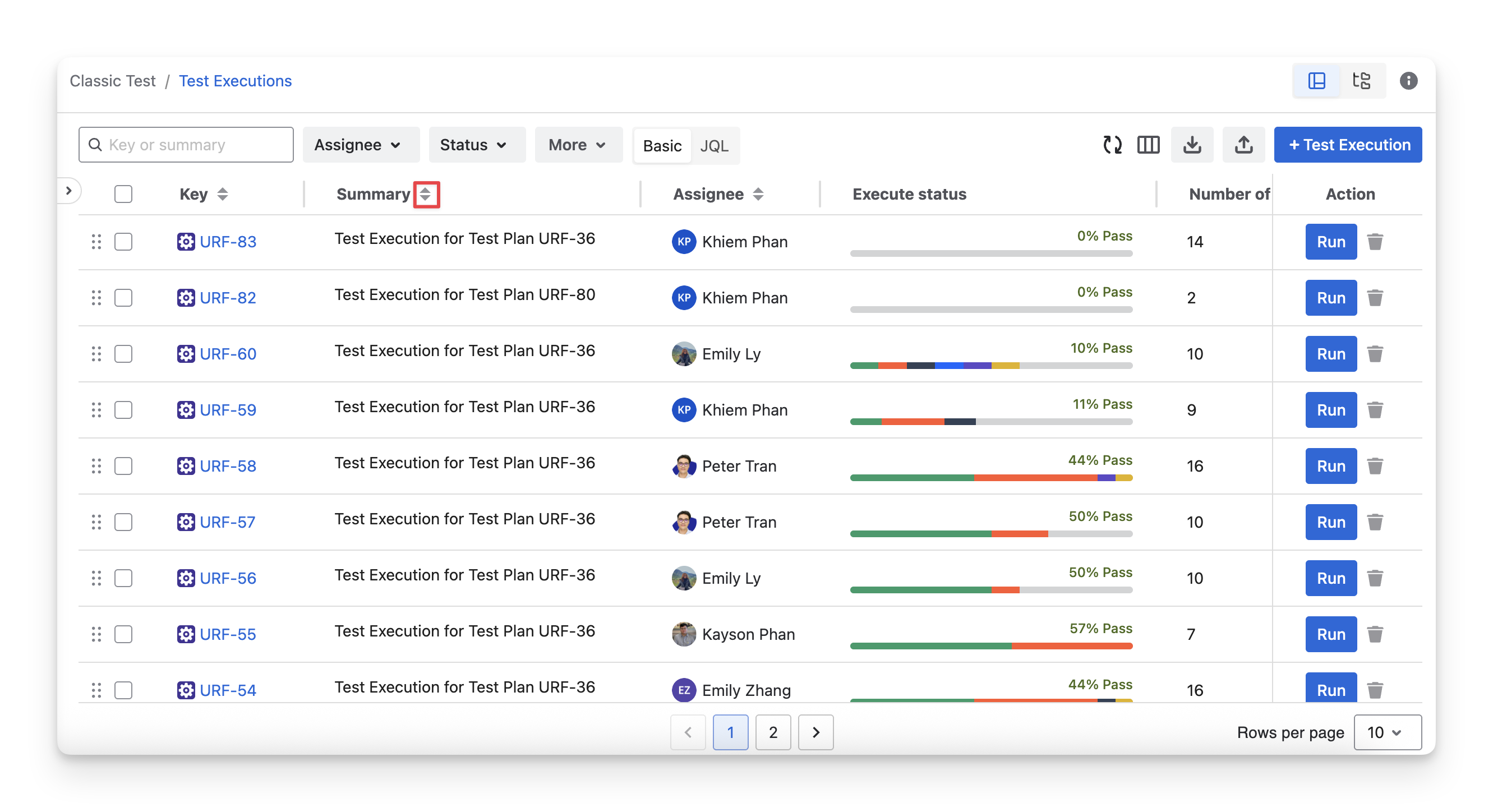
To sort any column and view the data in ascending or descending order, you can:
-
Choose the 🔼 to sort ascending.
-
Choose the 🔽 to sort descending.
2.4 Filter Test Executions
2.4.1 Filter Test Executions with Standard Fields
To quickly identify a specific test execution, you can:
-
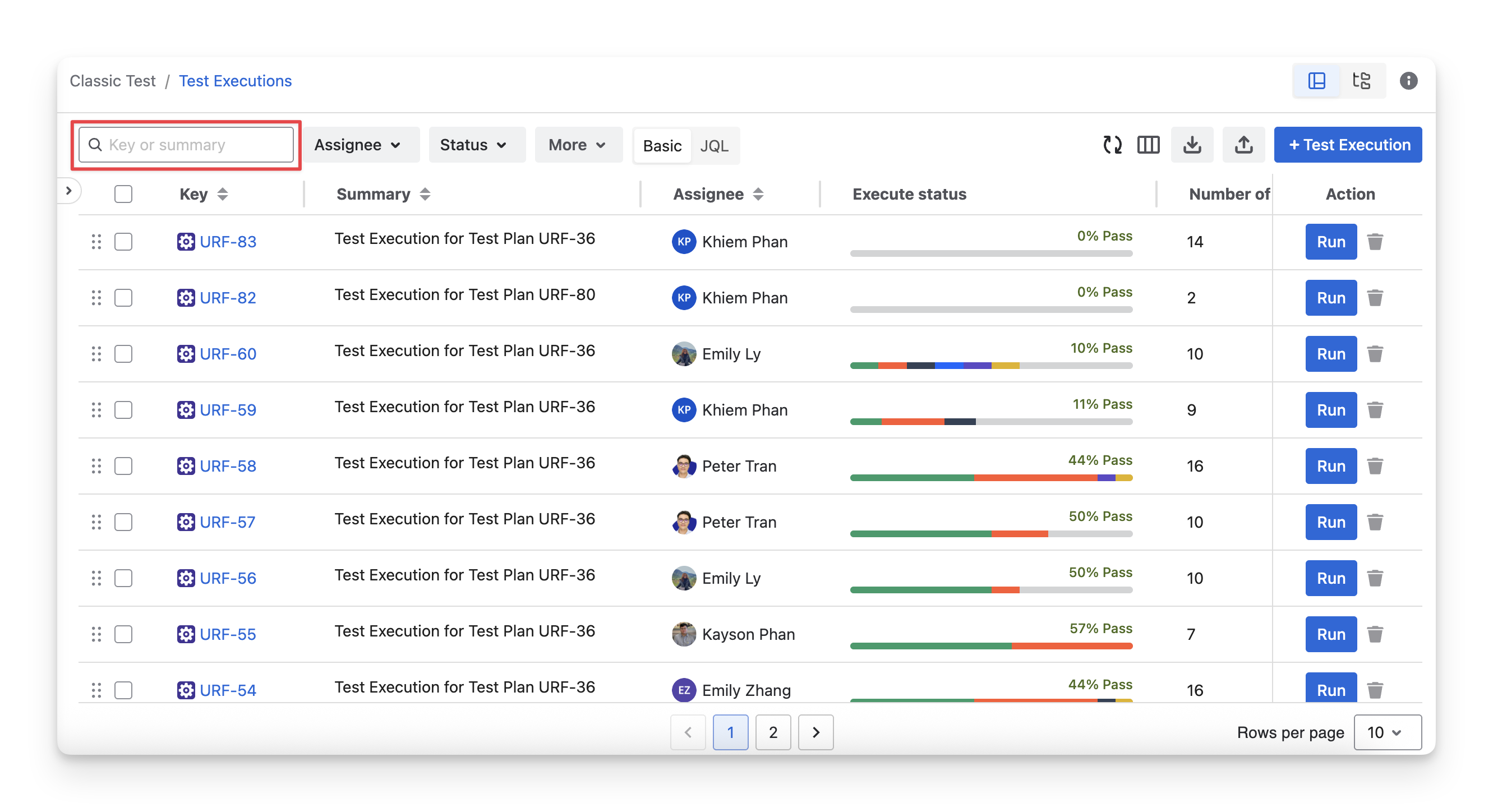
Provide Jira Key ID or the Test Execution Summary to find the exact test execution.
-
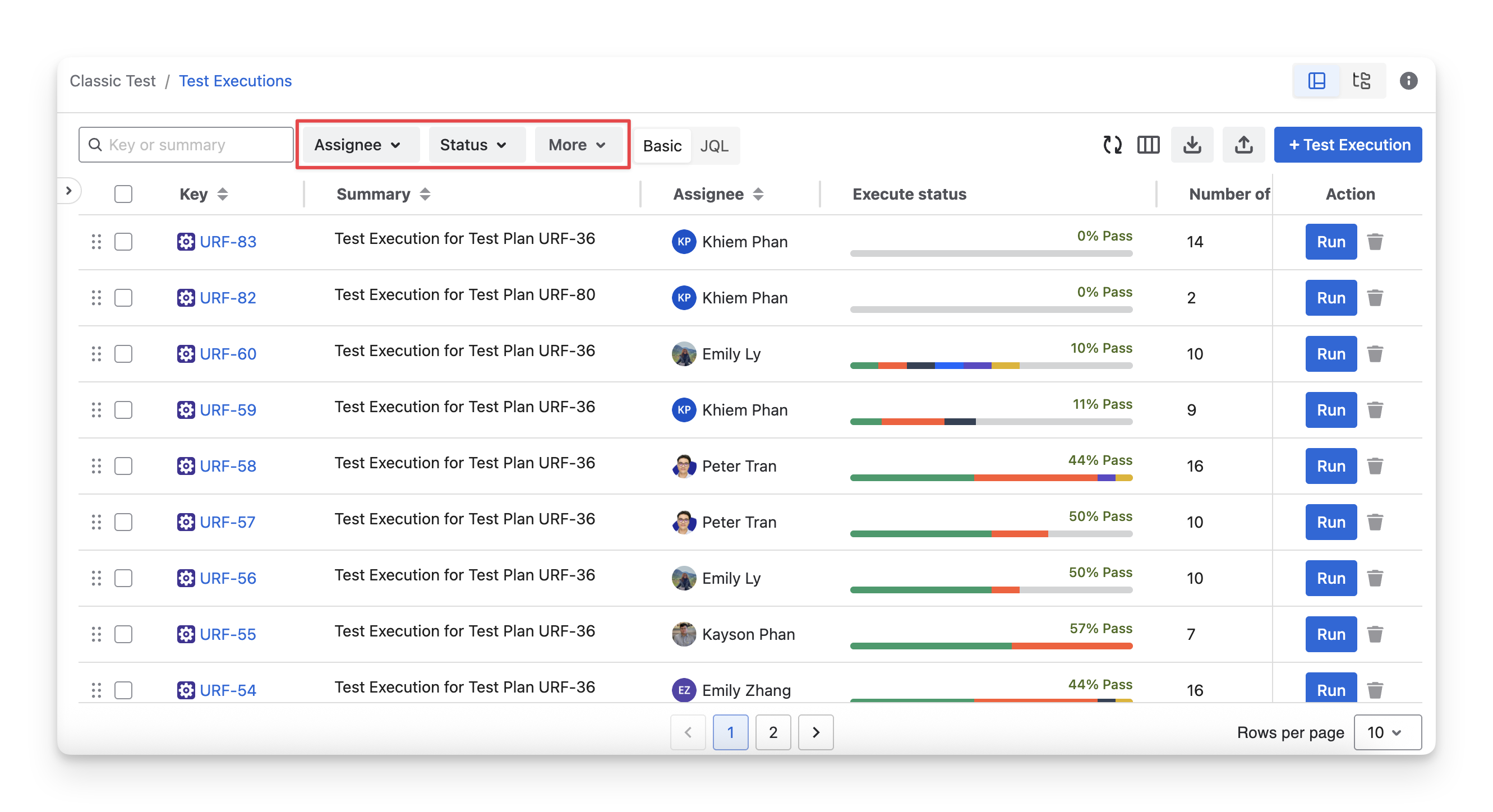
Apply Filters to narrow down the list
-
Assignee: your team members assigned to test executions.
-
Status: your Jira status of the test execution ticket ( todo ; in progress ; done ).
-
Reporter: your team members created test executions.
-
Priority: the test execution priority ( Highest ; high ; medium ; lowest ; low ).
-
-
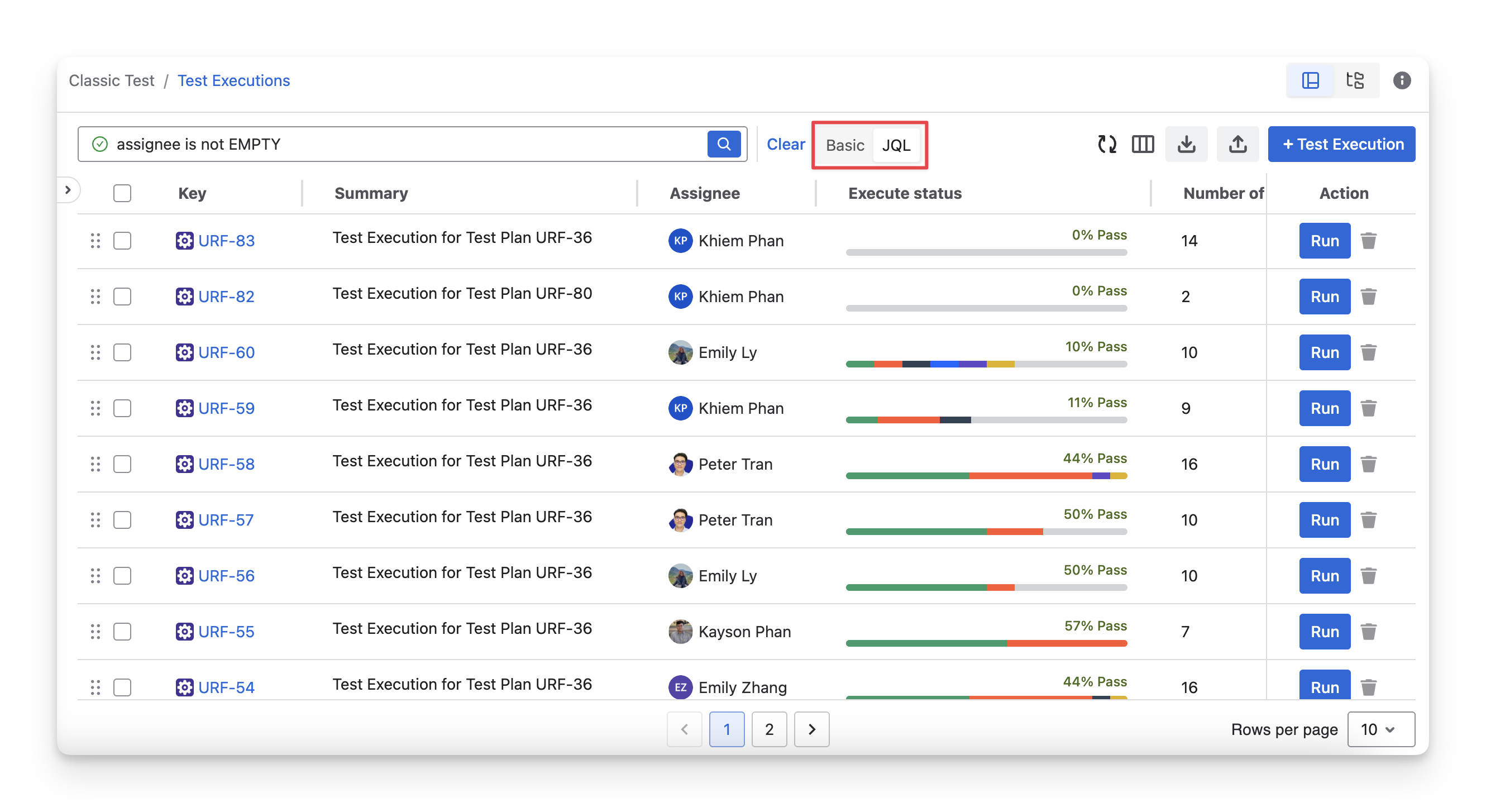
Or switch to JQL and enter your custom search.
2.4.2 Filter Test Executions with Milestone
In the Test Execution section, you can see the Milestone Status dropdown menu. This feature allows you to view test executions based on the milestone status and the milestone linking relationships with Jira items, offering a more structured and project-driven approach than the standard filter options.
Learn more about AgileTest Milestones.
By default, you can find the Milestone Status Dropdown on the left-hand side of the Test Execution section.
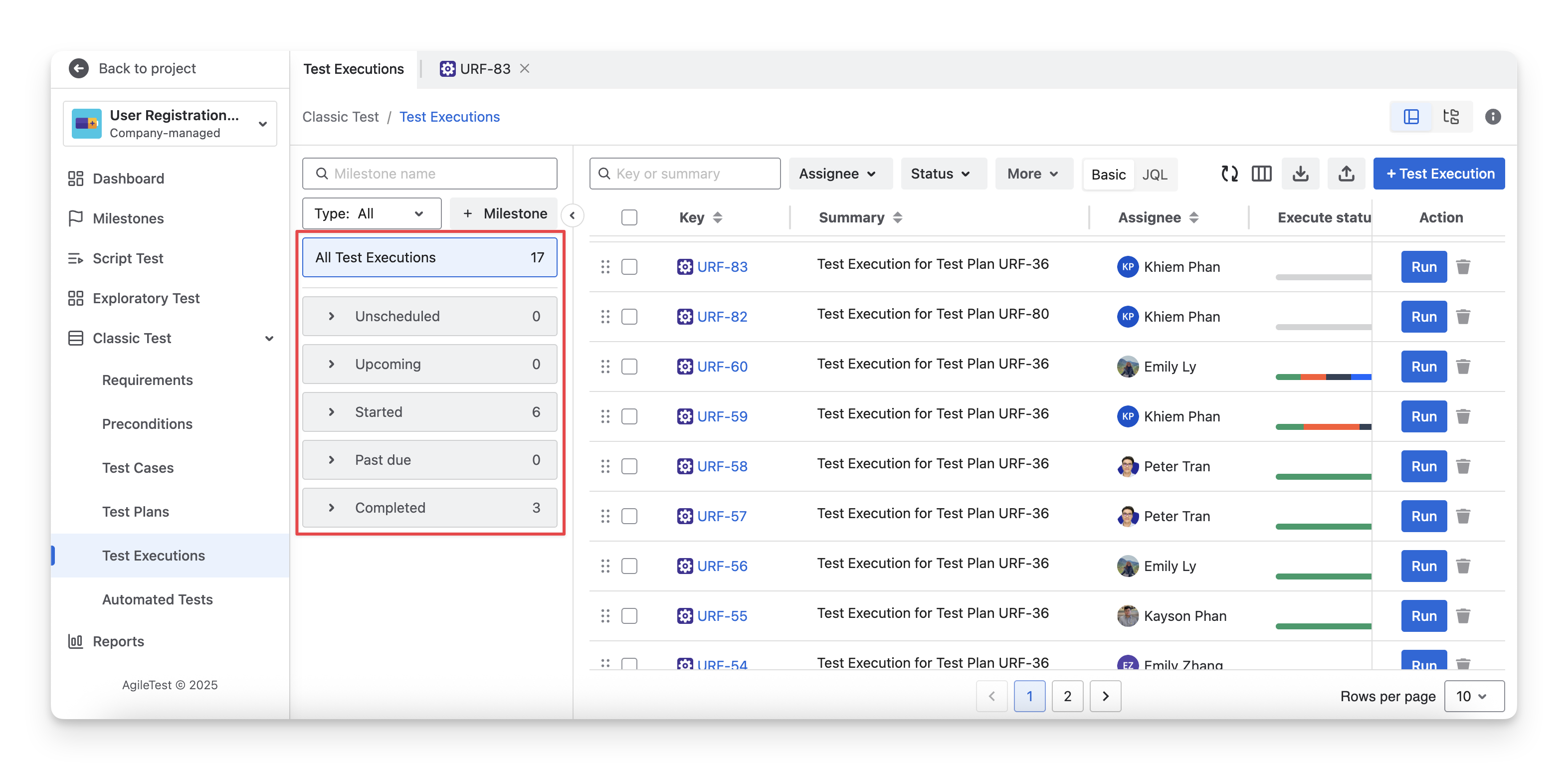
To open/close this tab, click on the ▶️ / ◀️ button on the left-hand side of the table.
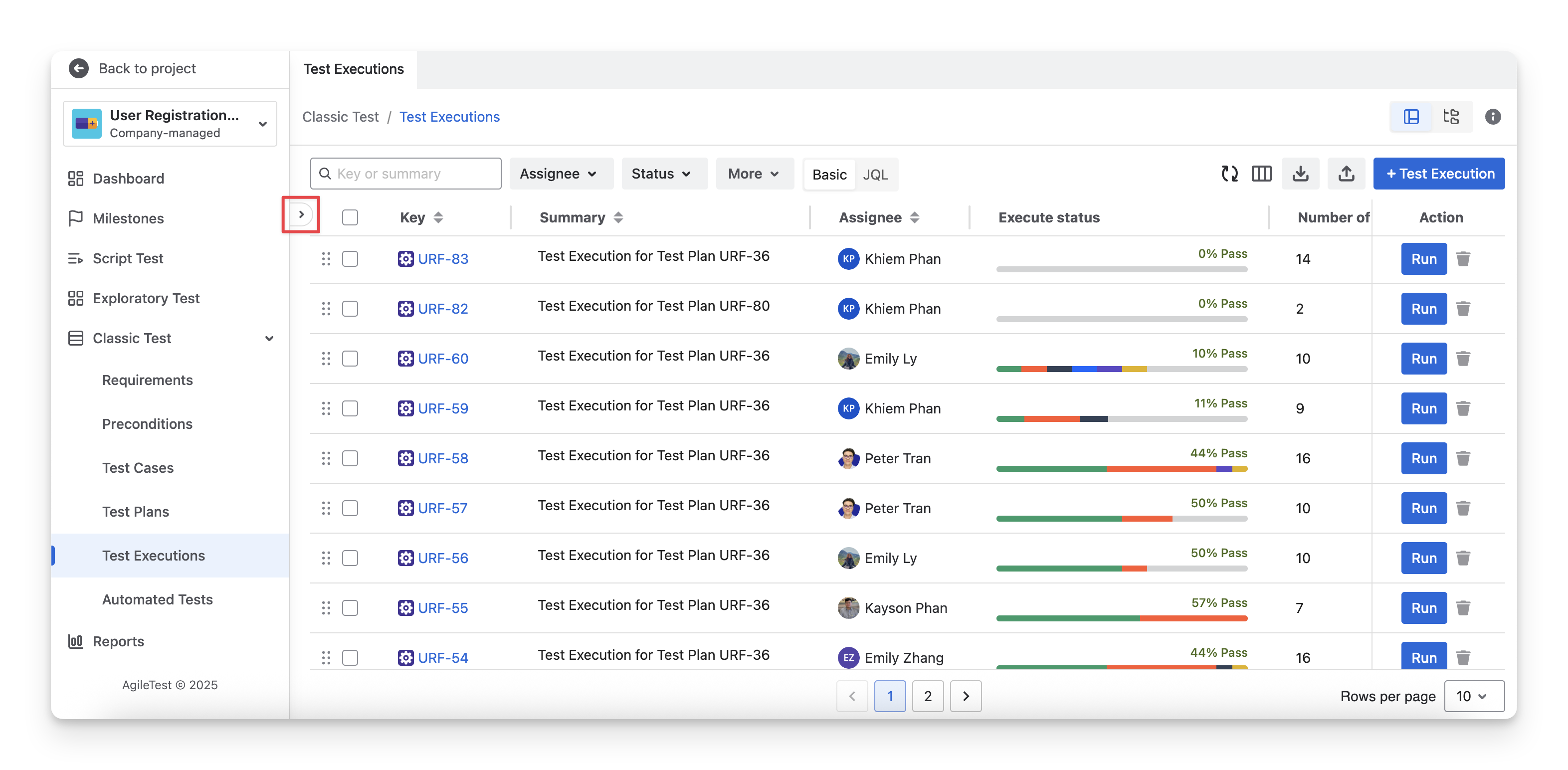
Once you click on a Milestone Status, the dropdown will display all milestones that match the selected milestone status. These statuses are:
-
Unscheduled : Test executions that belong to milestones that have not yet been scheduled.
-
past due : Test executions associated with milestones that have passed their planned end date but are not yet completed.
-
started : Test executions for milestones that are currently in progress.
-
upcoming : Test executions for milestones that are scheduled to start in the future.
-
Completed : Test executions for milestones that have been finished and closed.
When you choose a specific milestone in this dropdown menu, you can see the linked test executions of this milestone.
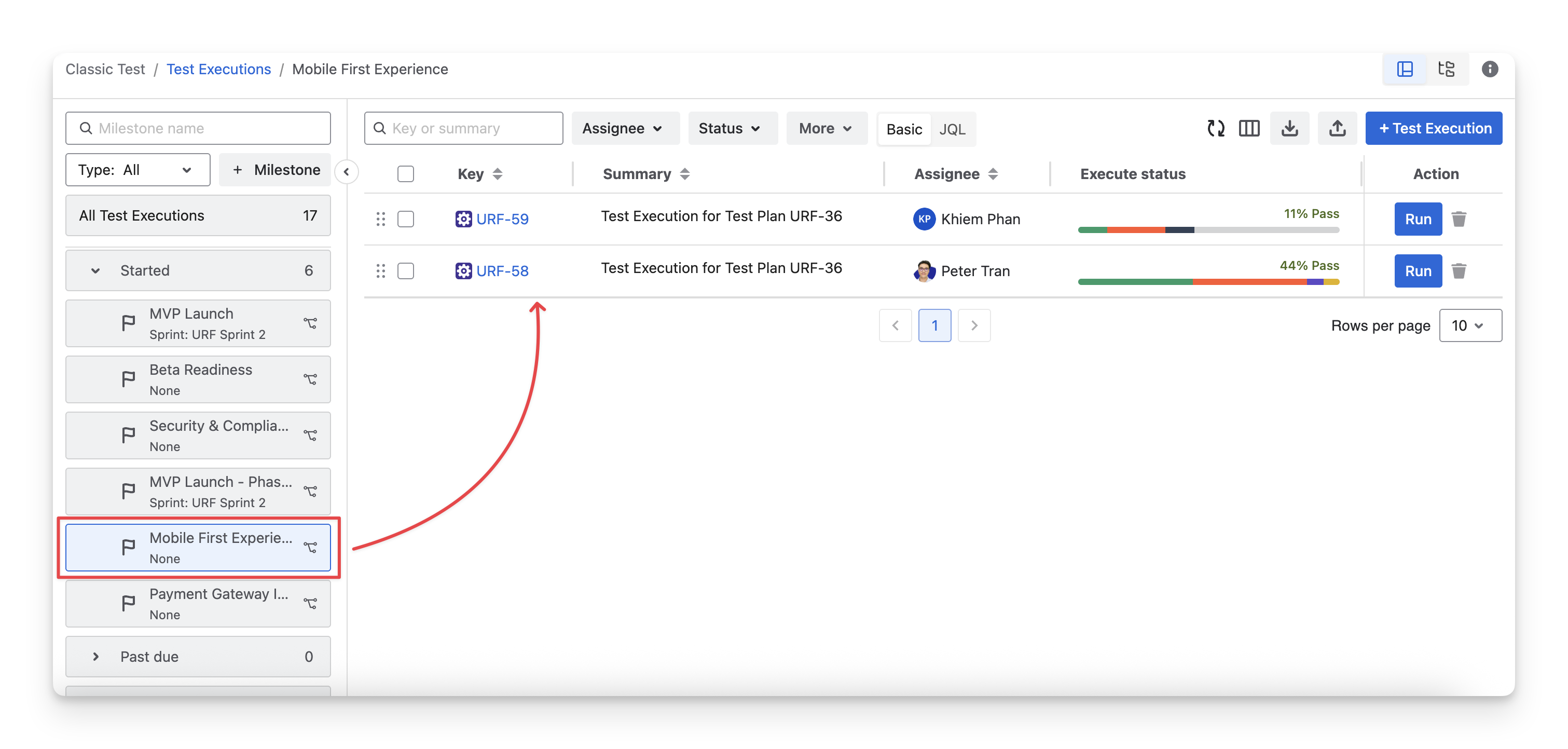
How to filter test executions by the milestone linking relationship?
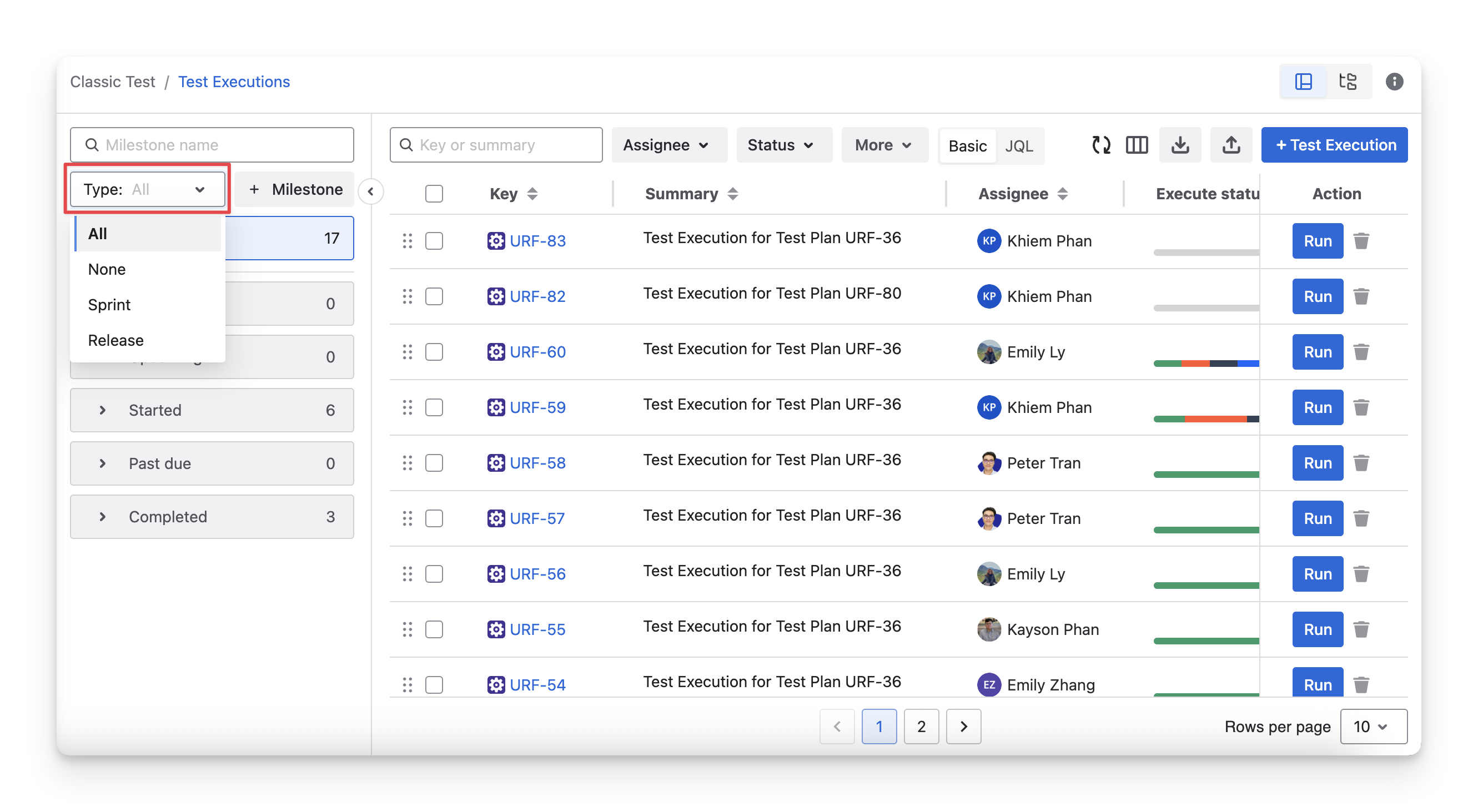
Use the Type filter in the Milestone Status Dropdown to quickly sort milestones linked to different Jira items:
-
None: Filter test executions for standalone milestones without Jira links.
-
Sprint: Filter test executions for milestones linked to a specific Jira sprint.
-
Release: Filter test executions for milestones linked to a Jira release.
2.5 Export Test Executions
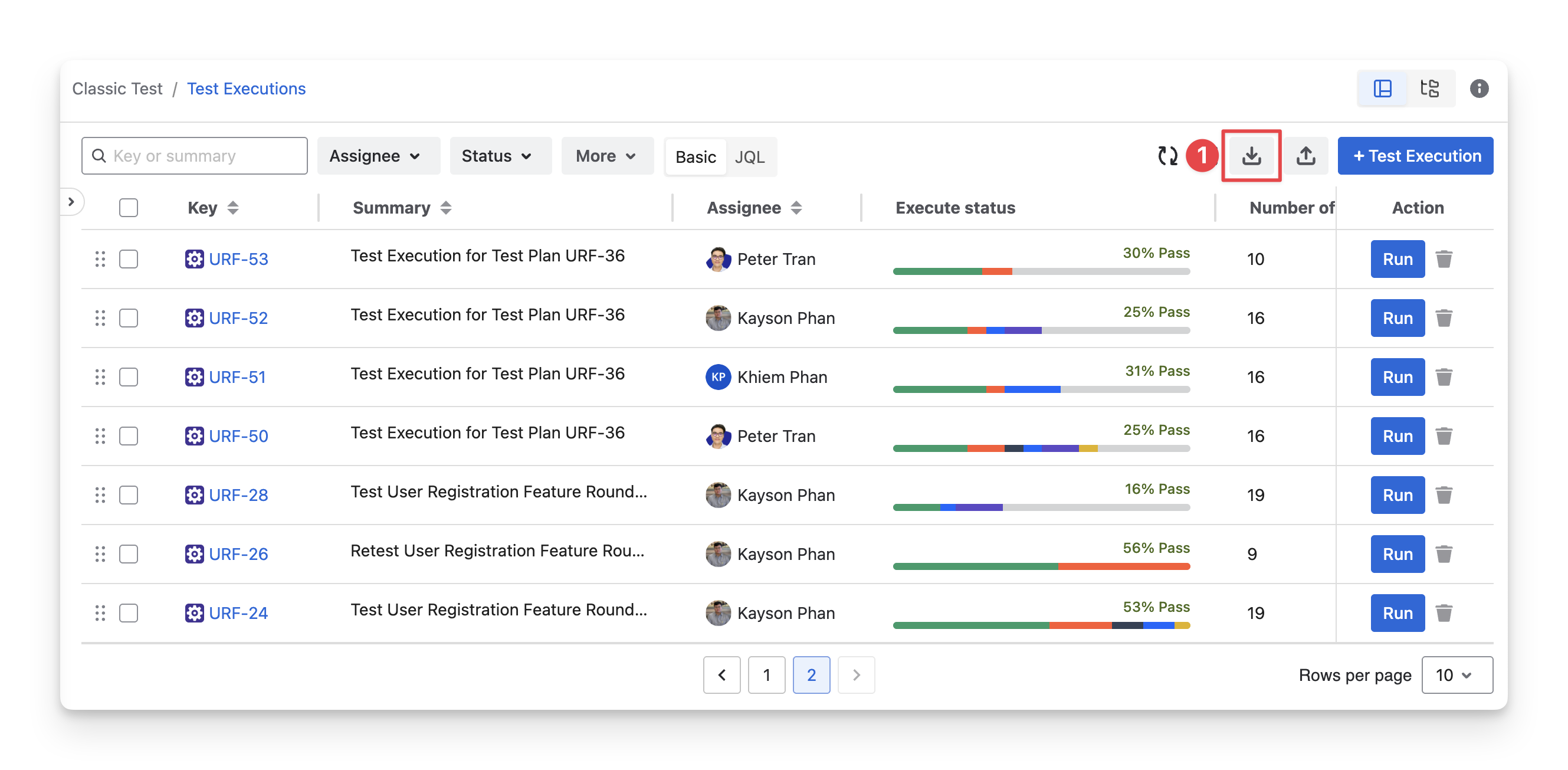
To export Test Executions from AgileTest to CSV and XLSX Files for tool migration or internal storage purposes, you can follow these steps:
-
Choose the “Export” button.
-
Select the type of CSV/XLSX files. Currently, AgileTest allows you to download the test executions into:
-
CSV Text Only Files: Download test executions as a simple CSV file with only the raw text data, without any formatting or styling. This is ideal for use in other tools or systems that need just the plain test execution data.
-
CSV Text With Styles: Download test executions in a CSV format that includes basic styling, such as color or bold text, to make the data easier to read when opened in spreadsheet software.
-
XLSX Text Only Files: Download test executions in an Excel (XLSX) format with only text content, no additional styles. This provides a clean, structured format for viewing or importing into other systems.
-
XLSX Text With Styles: Download test executions in an Excel (XLSX) format with text content and added styles for better readability and organization within Excel.
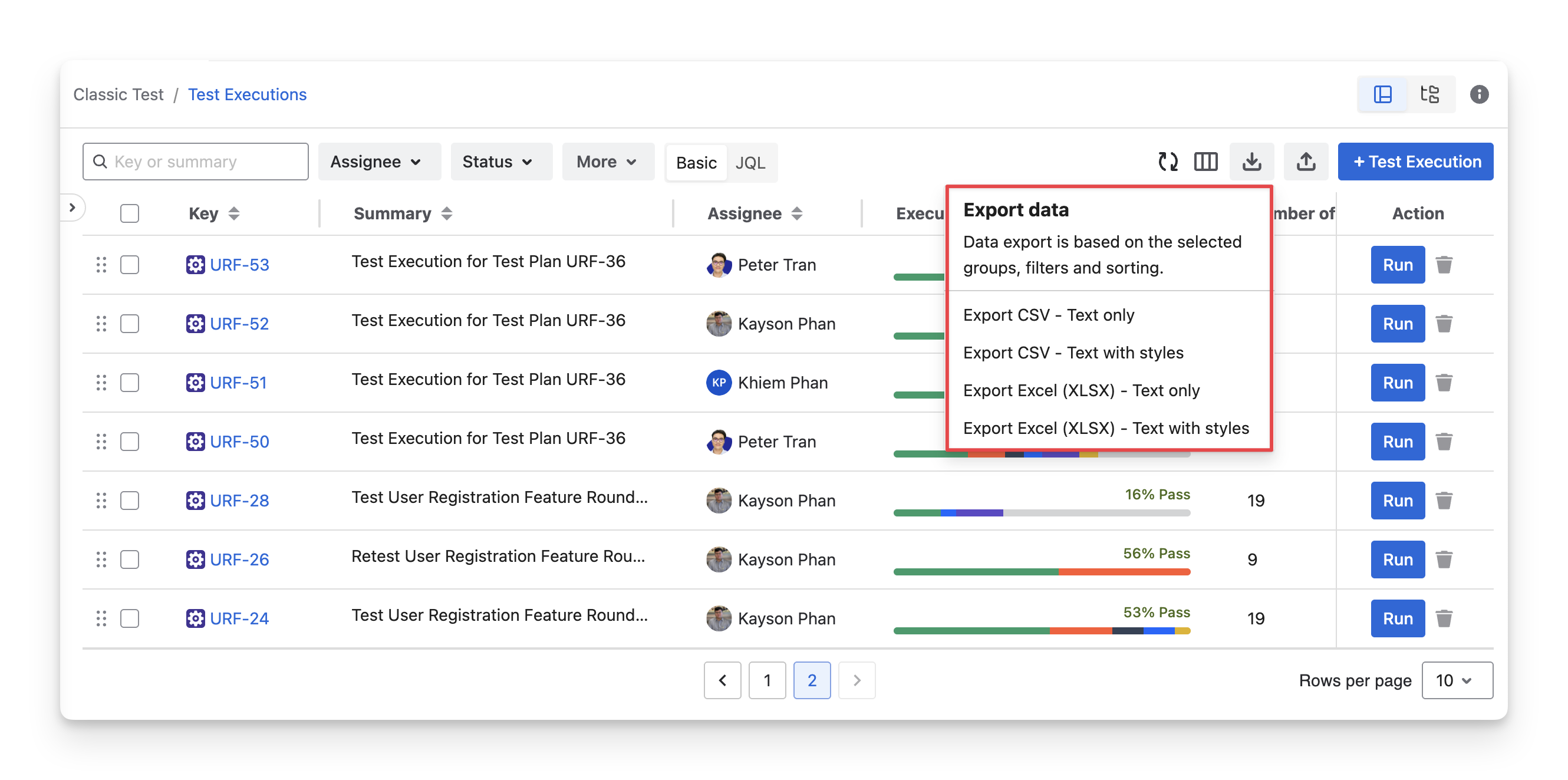
This approach downloads all sorted or filtered test executions to your screen without allowing the selection of specific test executions to exclude.
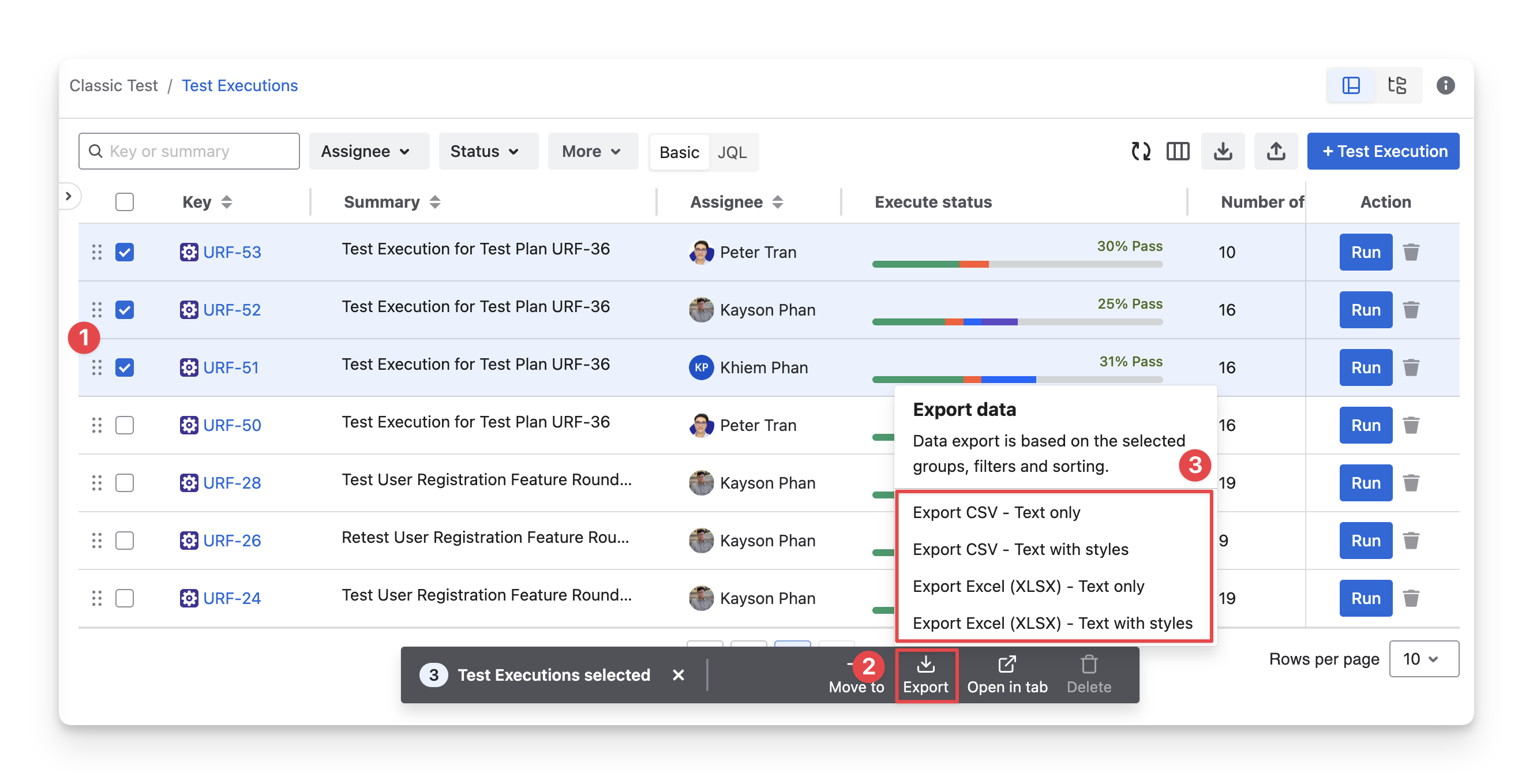
How can you export only some specific test executions?
-
Apply the Filters and select your desired test executions.
-
Click on the “Export” button on the smart toolbar.
-
Choose the CSV/XLSX File Types you want to receive results for.
2.6 Delete Test Execution
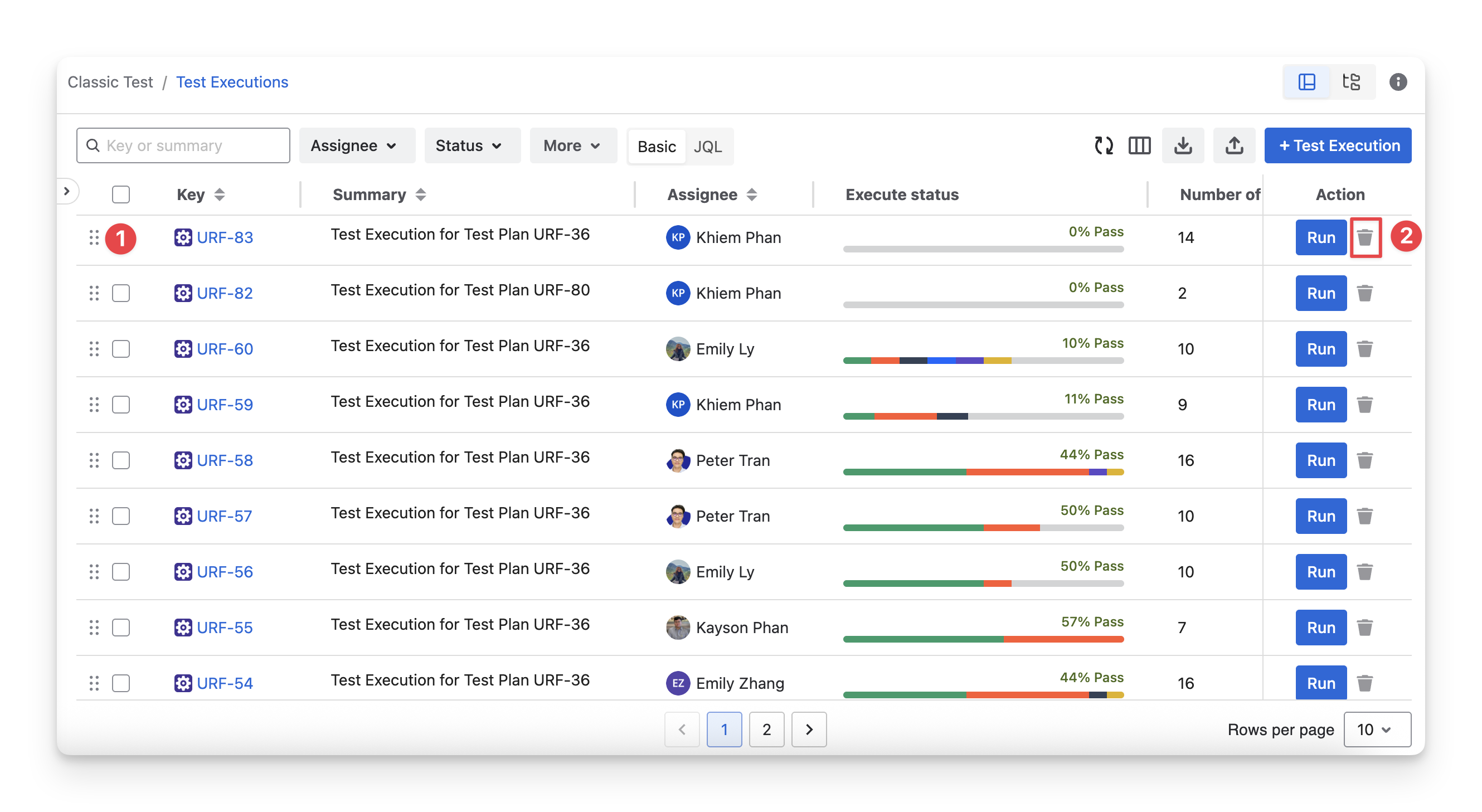
To delete a test execution, follow these steps:
-
Navigate to the test executions you want to delete.
-
Click on the :delete_icon: icon in the Action column.
2.7 Clone Test Execution
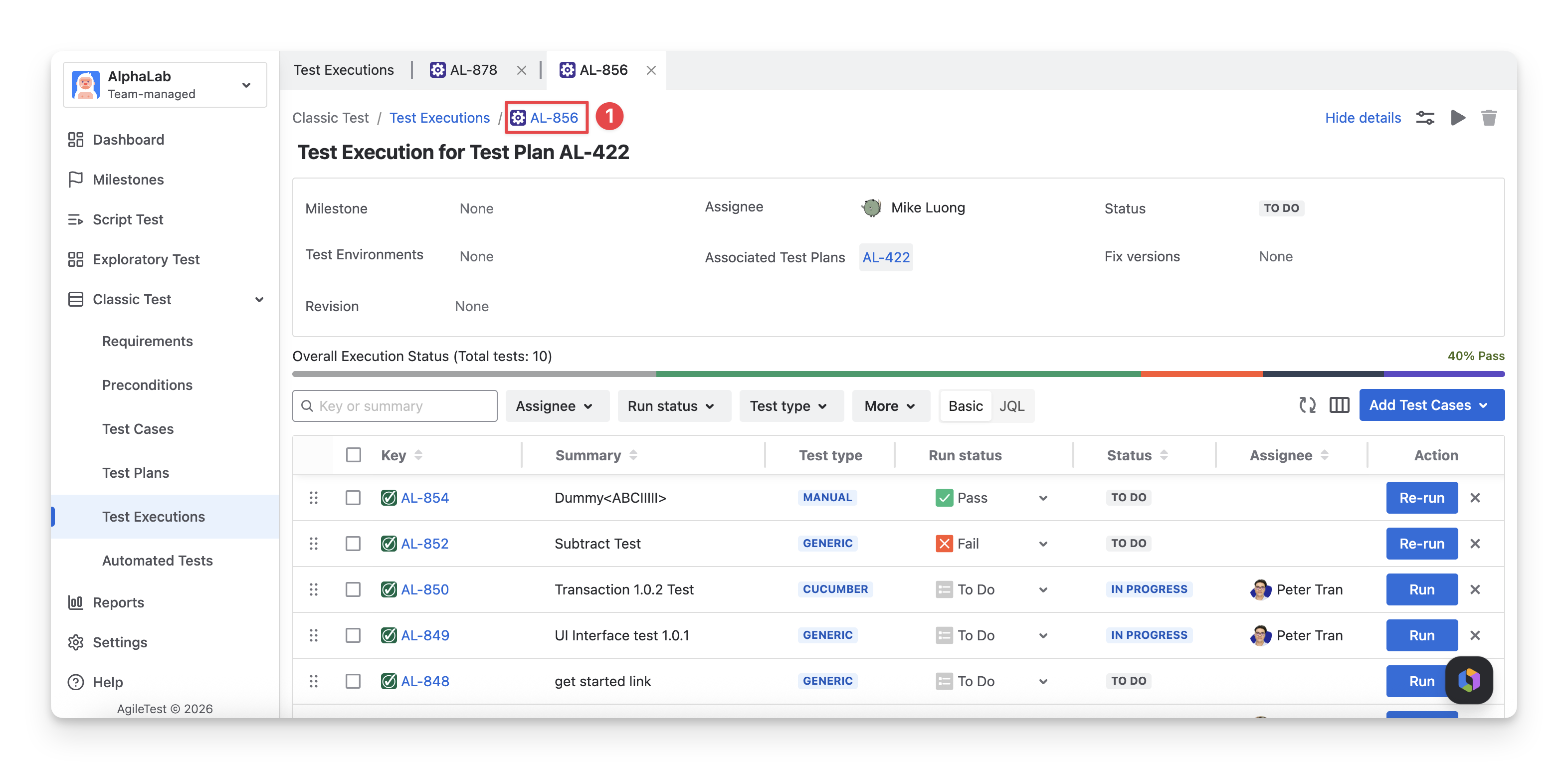
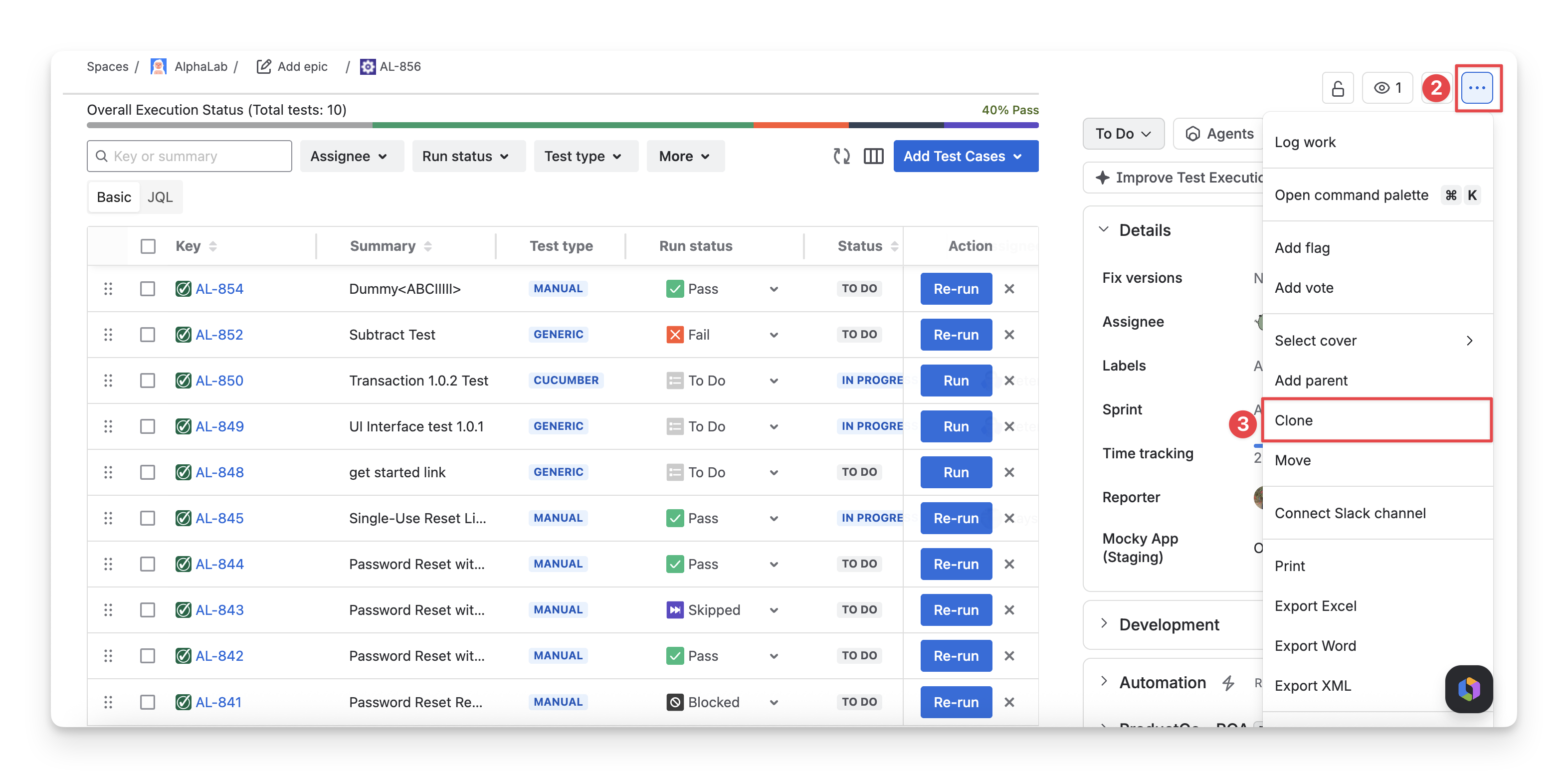
AgileTest allows you to quickly clone a Test Execution together with its details. Follow the steps below:
-
Select the test execution you want to duplicate, then click on its Jira ticket link.
-
In the Test Execution Jira ticket, click on the 3-dot button on the top right corner.
-
Choose the “Clone” option.
-
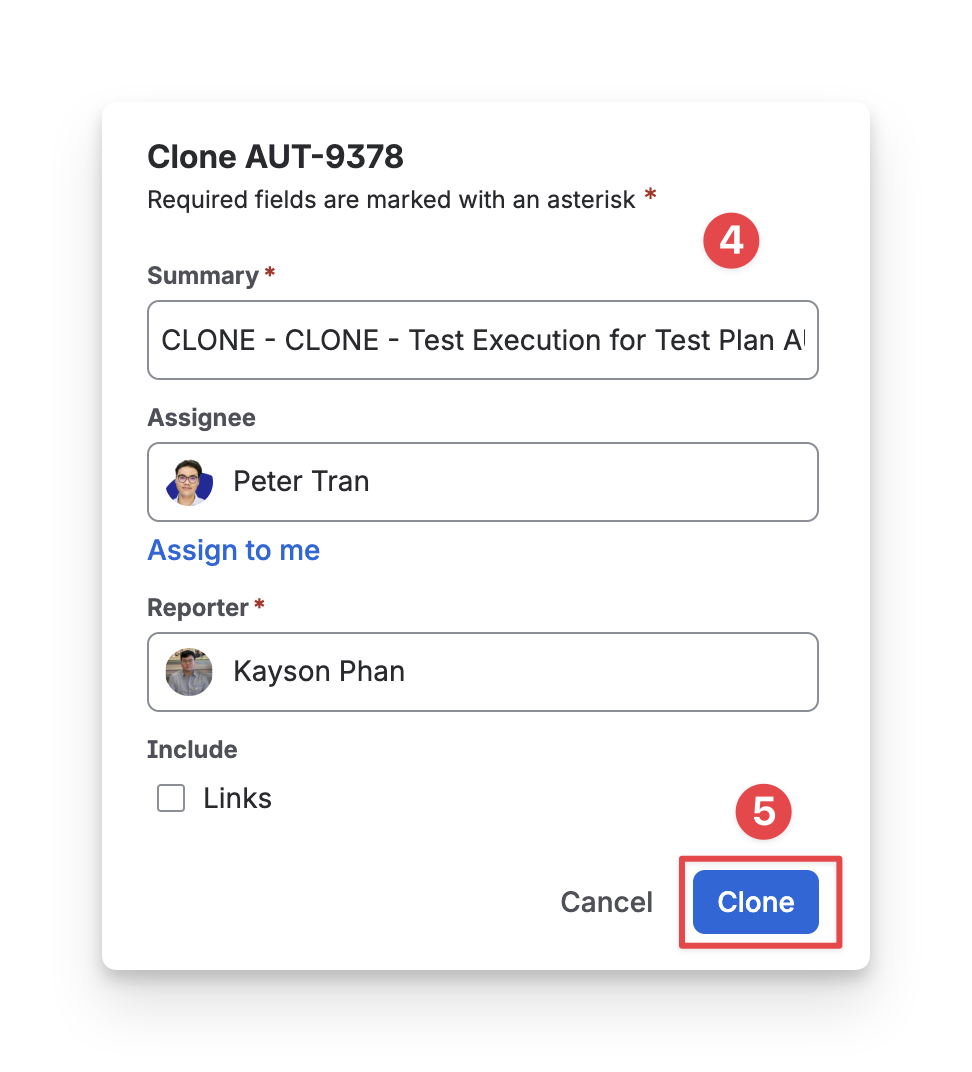
Fill in the details for the duplicated Test Execution.
-
Summary: Enter the summary for the new Test Execution.
To retain the original test case status in the new execution, add [keep] at the end of the Summary field. If not, AgileTest will clone a new test execution with the status of steps/test cases reset to TODO .
-
Assignee: Select the assignee.
-
Reporter: Select the reporter.
-
Include: AgileTest automatically includes attachments, child work items, comments, and sprint values when you clone a Test Execution.
-
Links: Select this option to link the cloned Test Execution with the work items linked to the original Test Execution.
-
-
Click the “Clone” button to finish.
Should you need any assistance or further AgileTest inquiries, contact our 24/7 Support Desk!