.png)
This section explains how to configure GitHub in AgileTest to trigger CI/CD pipelines remotely. Once configured, AgileTest can connect to your GitHub repository and allow QA teams to run automated tests directly from a Test Execution issue without switching to GitHub.
Firstly, click the New GitHub Configuration button to reveal the configuration dialog.
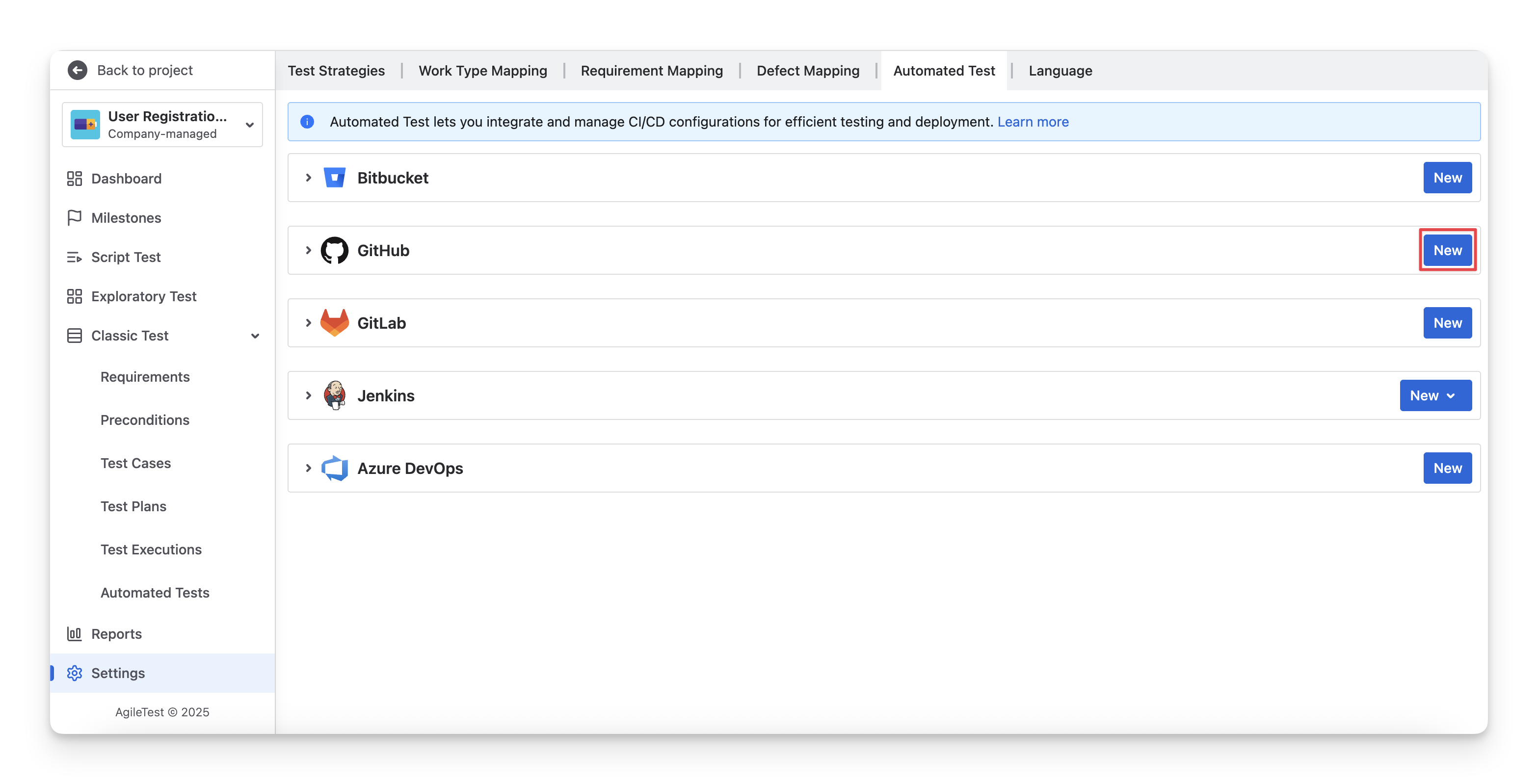
A dialog will open for you to enter details.
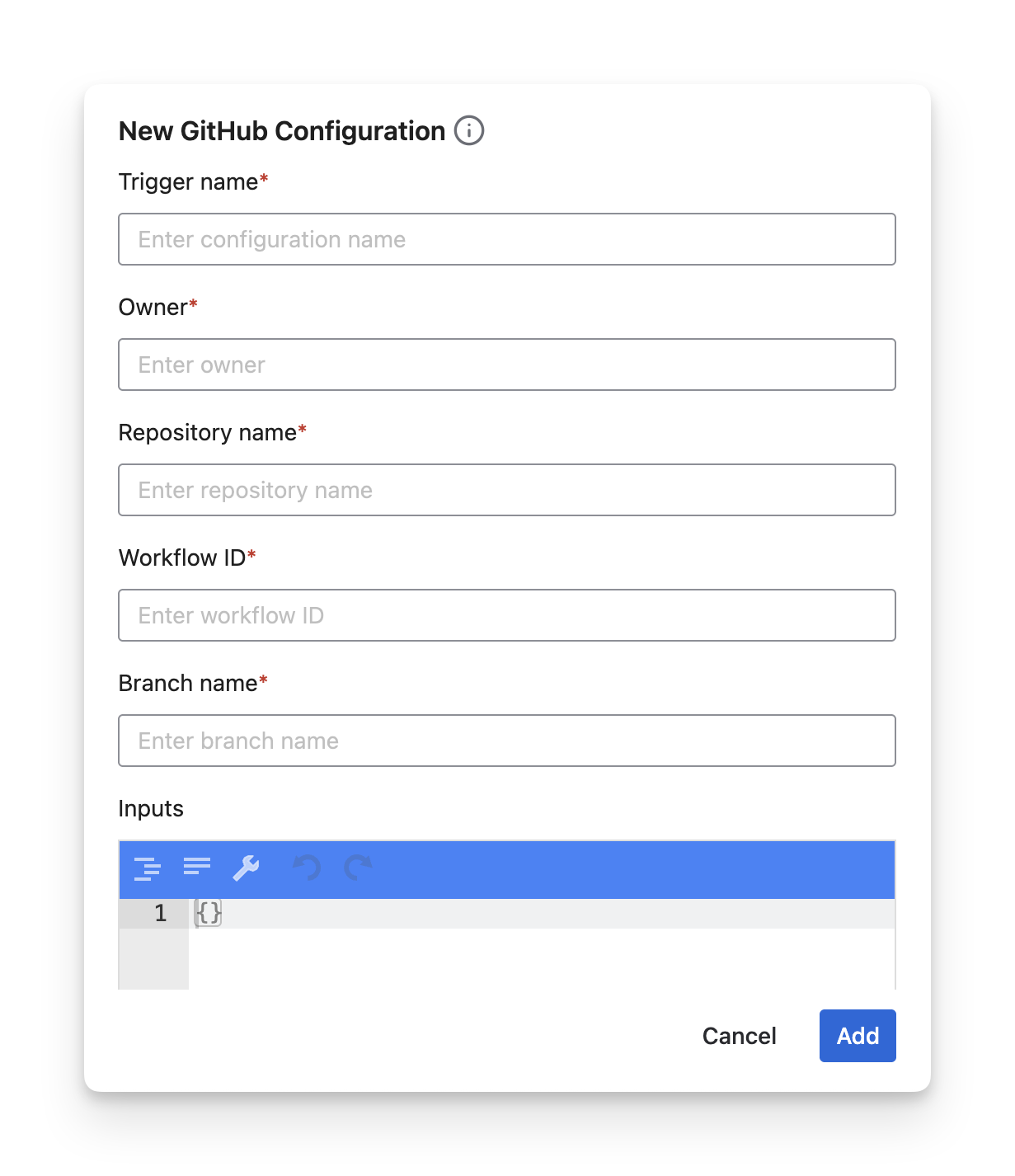
You are required to fill in the details as follows.
-
Trigger Name: New trigger name for this configuration.
-
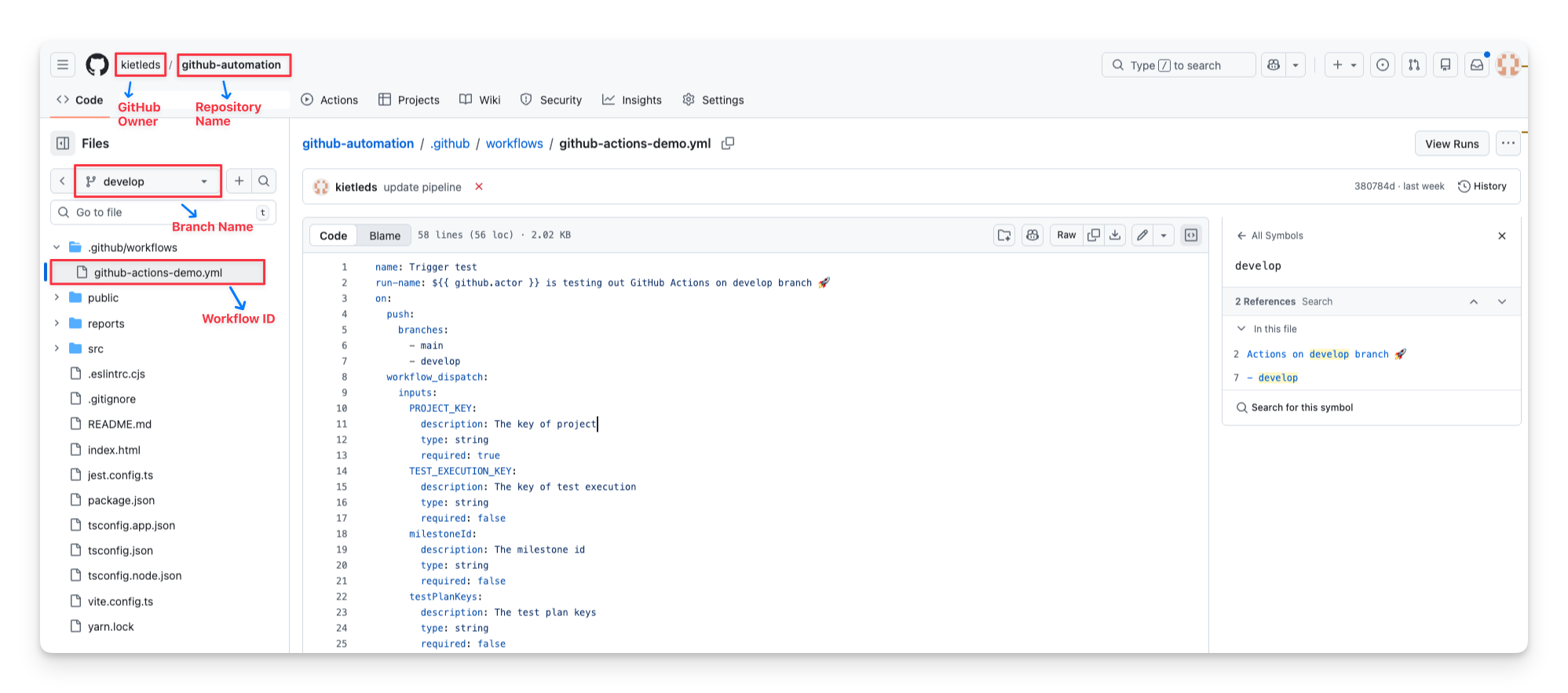
GitHub Owner: A string of your GitHub account name.
-
Repository Name: A string of the current repository.
-
Workflow ID: The YAML file name.
-
Branch Name: A string of the branch on which we are going to trigger the workflow.
-
Inputs: This field allows users to add custom variables to send along with the triggering request. In most cases, it won't be necessary. However, in certain situations, it can be useful for integrating with additional setups in your GitHub workflow.
You can customize the Inputs with the GitHub Rest API docs here.
-
Access Token: A string of your Personal Access Token. To get one please refer to this document from GitHub Managing your personal Access Tokens.
You need to grant the “Write” pipelines permission.
-
Additional Parameters: Additionally, we support extra parameters to map between your tools with AgileTest. They include:
|
Additional Params |
Description |
|
FixVersion |
Fix Version linked with the test execution |
|
Milestone id |
The id number of a milestone. |
|
Revision |
Source code version used in the test execution |
|
Test environment |
A string contains a list of Test environments separated by “,” |
|
Test plan key |
Test plan issue key |
Should you need any assistance or further AgileTest inquiries, contact our 24/7 Support Desk!